The healthcare industry is booming, creating a massive demand for skilled professionals. But you don't need a decade of schooling to get started. Many of the most rewarding and stable careers have accessible entry points, allowing you to make a difference and a good living in under a year. This guide cuts through the noise to showcase the 10 best entry level healthcare jobs available right now.
We'll break down the day-to-day duties, training timelines, salary expectations, and practical next steps for each role. Whether you're interested in direct, hands-on patient care or a vital behind-the-scenes administrative position, your path to a fulfilling healthcare career starts here.
This list is designed for action. We've compiled the essential data and insights you need to choose a role that fits your skills, timeline, and professional aspirations. You will find clear information on roles like Certified Nursing Assistant (CNA), Medical Assistant, and Phlebotomy Technician, among others. Our goal is to help you launch a career with real purpose and significant growth potential without years of prerequisite education. Forget the overwhelming research; we’ve streamlined everything you need to know to make an informed decision and take your first step into a thriving field.
1. Certified Nursing Assistant (CNA)
A Certified Nursing Assistant (CNA) is a foundational role in healthcare, providing essential, hands-on patient care under the direct supervision of registered nurses (RNs) or licensed practical nurses (LPNs). CNAs are the backbone of many care teams, assisting patients with crucial activities of daily living such as bathing, dressing, eating, and mobility. This position is one of the best entry-level healthcare jobs because it offers a direct and rapid path to patient interaction without years of schooling.
CNAs work in diverse environments, from fast-paced hospitals and rehabilitation centers to long-term nursing homes and private residences. The versatility of the role allows for specialization and finding a work setting that best suits your skills and temperament.
Key Responsibilities and Career Path
A CNA’s duties are patient-centered, focusing on comfort, safety, and well-being. This can involve monitoring vital signs, documenting patient information, and providing emotional support.
- Hospital CNAs: Assist post-surgical patients with recovery and basic care.
- Home Health CNAs: Provide one-on-one care for elderly or disabled clients in their homes.
- Memory Care CNAs: Specialize in caring for patients with dementia or Alzheimer's.
The following bar chart visualizes the accessible entry requirements for becoming a CNA, highlighting the balance between training investment and earning potential.
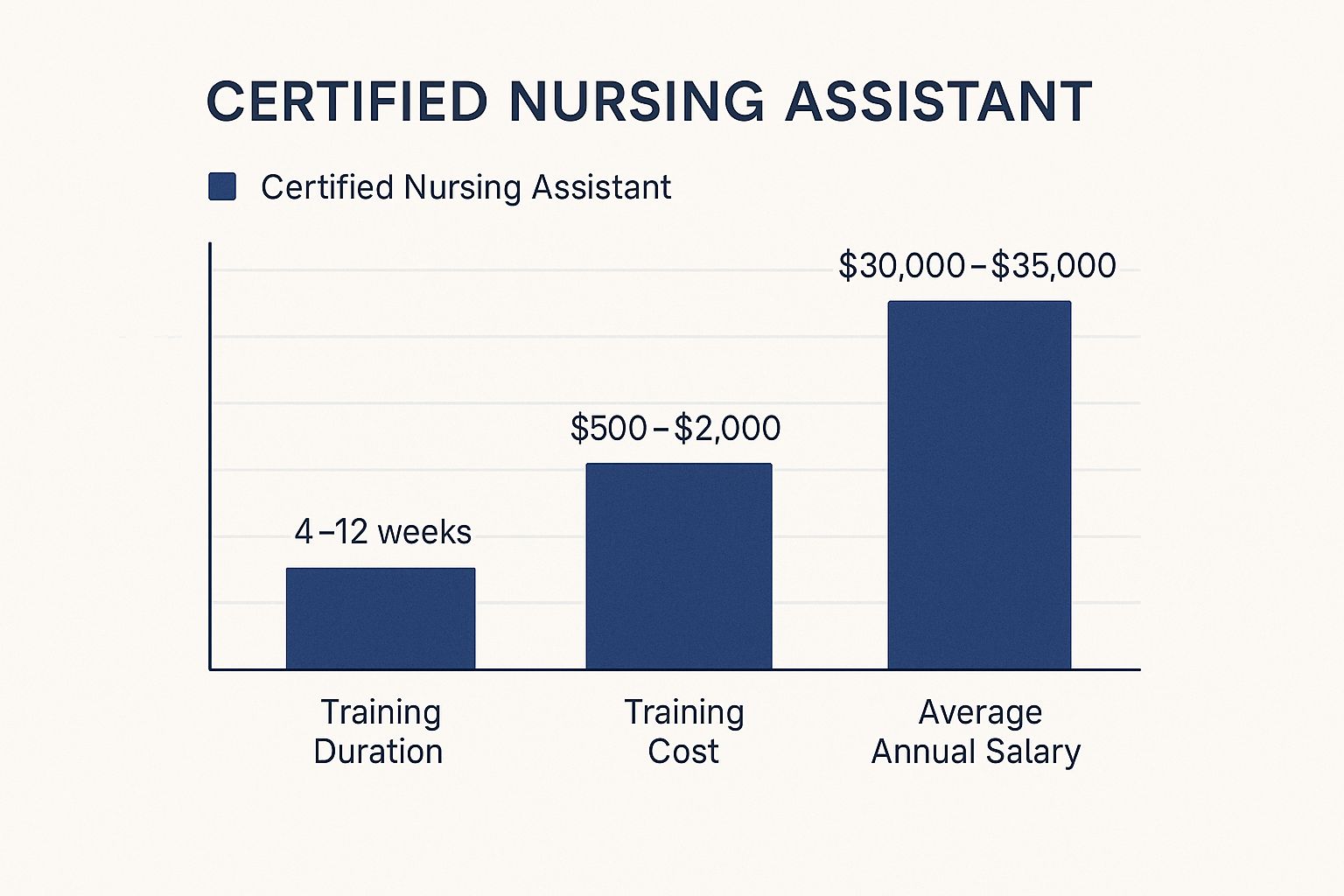
The chart clearly shows that becoming a CNA requires a relatively low upfront investment in both time and cost compared to its salary potential, making it a highly efficient entry point into the healthcare field.
Becoming a CNA
To start, you must complete a state-approved training program, which typically takes 4-12 weeks. After the program, you must pass a competency exam to earn your certification. For those preparing, you can learn more about the CNA written exam and what to expect. This role is an excellent stepping stone for those aspiring to become LPNs or RNs, providing invaluable experience and a solid foundation in patient care principles.
2. Medical Assistant
A Medical Assistant (MA) is a versatile healthcare professional who handles a blend of clinical and administrative tasks, making them indispensable in settings like physician's offices, clinics, and outpatient centers. They act as a critical link between patients and physicians, performing duties that range from taking vital signs and administering medications to managing patient records and scheduling appointments. This role is one of the best entry-level healthcare jobs because it provides a comprehensive overview of both the clinical and administrative sides of healthcare.
The dual nature of the MA role means you can find a niche that fits your interests, whether you prefer direct patient interaction or the organizational challenges of running a medical office. This adaptability makes it a dynamic and engaging career choice with numerous opportunities for growth.
Key Responsibilities and Career Path
A Medical Assistant's duties are varied, ensuring no two days are the same. Their responsibilities support the overall efficiency and quality of patient care.
- Dermatology MAs: Assist with minor skin procedures and patient education on skincare.
- Cardiology MAs: Specialize in conducting EKGs, stress tests, and patient monitoring.
- Pediatric MAs: Focus on providing care for children, including administering vaccinations.
To excel, it's crucial to gain proficiency in electronic health records (EHR) systems and develop strong phlebotomy skills, as these are highly valued by employers. Building excellent interpersonal skills is also key for effective patient communication and support.
Becoming a Medical Assistant
The path to becoming a Medical Assistant typically involves completing a certificate or associate degree program, which can take anywhere from 9 months to two years. While certification is not legally required in all states, most employers strongly prefer or require it. Earning a credential like the Certified Medical Assistant (CMA) from the American Association of Medical Assistants (AAMA) significantly boosts job prospects and credibility. This role serves as a fantastic launchpad for further education in nursing, physician assistant studies, or healthcare administration.
3. Phlebotomy Technician
A Phlebotomy Technician is a specialized healthcare professional trained to draw blood from patients for tests, donations, transfusions, or research. Phlebotomists are crucial to the diagnostic process, as the samples they collect help physicians diagnose and treat illnesses. This role is considered one of the best entry-level healthcare jobs due to its short training period, focused skill set, and high demand in nearly every medical setting.
Phlebotomists work in a variety of environments, including hospitals, diagnostic laboratories, blood donor centers, and physicians' offices. The precision and technical skill required for this job, combined with the need for excellent patient interaction, make it a rewarding and respected position.
Key Responsibilities and Career Path
A phlebotomist's primary duty is performing venipuncture, but the role also includes verifying patient identity, labeling samples accurately, and ensuring patient comfort and safety. Proper specimen handling and transport are critical to prevent contamination and ensure test accuracy.
- Hospital Phlebotomists: Often work in fast-paced environments like emergency rooms, drawing blood from patients with diverse medical needs.
- Mobile Phlebotomists: Travel to patients' homes, nursing facilities, or other locations to perform blood draws for those with limited mobility.
- Blood Bank Phlebotomists: Specialize in collecting blood from donors and managing the donation process.
This position offers a clear career trajectory. With experience, a phlebotomist can advance to a supervisory role, become a phlebotomy instructor, or use their skills as a foundation to pursue further education in medical laboratory technology or nursing.
Becoming a Phlebotomy Technician
To become a phlebotomy technician, you typically need to complete a postsecondary training program, which can last from a few weeks to several months. These programs combine classroom instruction with extensive hands-on clinical practice. After completing training, passing a certification exam from an organization like the American Society for Clinical Pathology (ASCP) is highly recommended, as most employers prefer certified candidates. This certification demonstrates your competence and commitment to patient safety and quality care.
4. Emergency Medical Technician (EMT)
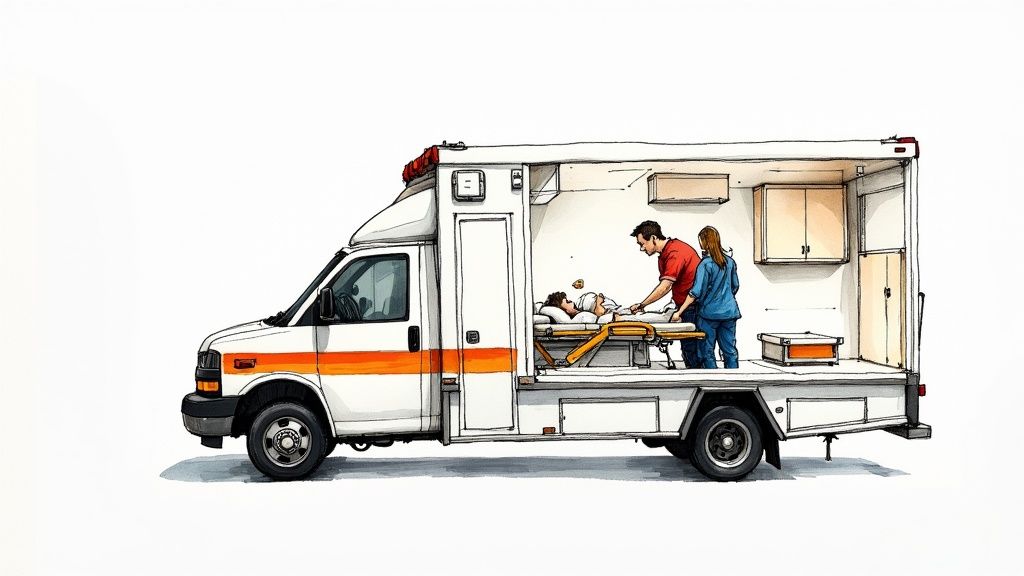
An Emergency Medical Technician (EMT) is a frontline healthcare professional who provides immediate medical care in emergency situations. EMTs are often the first responders on the scene of an accident or medical crisis, assessing patient conditions, administering basic life support, and transporting individuals to hospitals. This role is one of the best entry-level healthcare jobs for those who thrive in high-pressure, dynamic environments and want to make an immediate impact.
EMTs primarily work in ambulances but can also be found in fire departments, hospitals, and at large-scale events. The role requires quick thinking, physical stamina, and the ability to remain calm under pressure while delivering life-saving interventions.
Key Responsibilities and Career Path
An EMT’s duties revolve around rapid assessment and stabilization. This includes performing CPR, controlling bleeding, splinting injuries, and safely moving patients. The career path for an EMT often involves advancing to higher levels of certification.
- 911 Emergency Response: Respond to trauma, cardiac emergencies, and other urgent medical calls.
- Interfacility Transport: Move stable patients between medical facilities for specialized care.
- Event Standby: Provide on-site medical coverage at concerts, sports events, and festivals.
- Wilderness EMTs: Specialize in rescue and medical care in remote, outdoor settings.
Becoming an EMT
The first step is completing a state-approved EMT-Basic training program, which typically takes between 120 and 150 hours of coursework. After completion, you must pass both a cognitive and psychomotor exam administered by the National Registry of Emergency Medical Technicians (NREMT) to achieve certification. Gaining experience through volunteering with a local ambulance service is a great way to start. This role provides a strong foundation for those who may want to become a Paramedic, firefighter, or physician assistant.
5. Pharmacy Technician
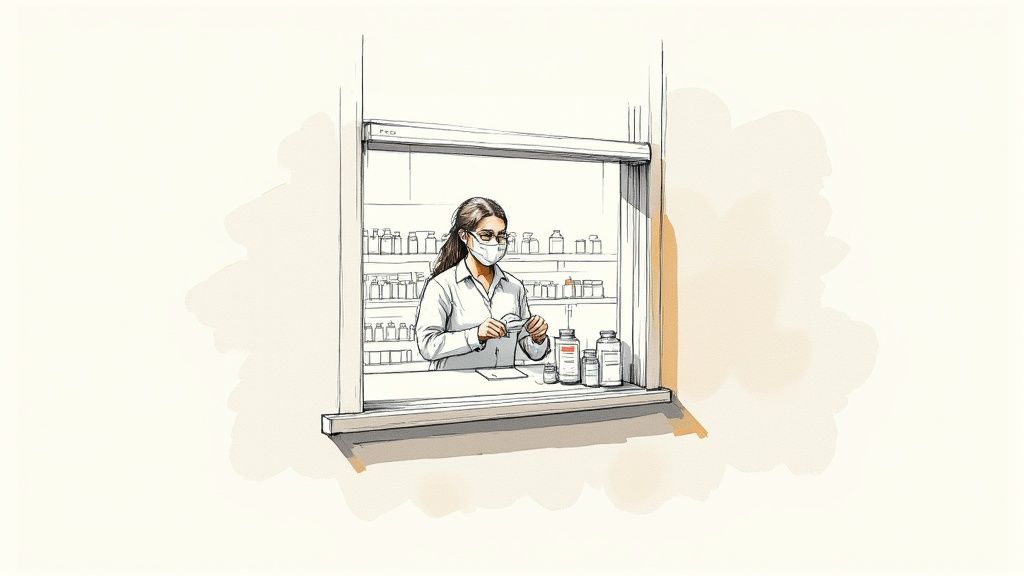
A Pharmacy Technician is a vital healthcare professional who works alongside a licensed pharmacist to ensure patients receive the correct medications safely and efficiently. Technicians are responsible for a range of tasks, from dispensing prescription drugs to managing inventory and processing insurance claims. This role is one of the best entry-level healthcare jobs because it offers a structured path into the pharmaceutical side of medicine without requiring a lengthy and expensive degree.
Pharmacy technicians can be found in various settings, including bustling retail pharmacies, specialized hospital departments, mail-order facilities, and long-term care homes. This variety allows for career flexibility and the opportunity to work in an environment that aligns with your interests, whether it's patient-facing or behind the scenes.
Key Responsibilities and Career Path
A pharmacy technician's duties combine technical precision with customer service, focusing on accuracy and patient safety. Key responsibilities include receiving prescription requests, accurately counting and labeling medications, and answering patient questions.
- Retail Pharmacy Techs: Manage high prescription volumes and provide direct customer service.
- Hospital Pharmacy Techs: Prepare sterile products, such as IV medications, and deliver them to patient floors.
- Compounding Techs: Create customized medications based on specific physician orders.
Becoming a Pharmacy Technician
The path to becoming a pharmacy technician typically involves completing a formal training program, which can last from six to twelve months, or through structured on-the-job training. Most employers now require or strongly prefer certification, which involves passing an exam like the Pharmacy Technician Certification Exam (PTCE). For those interested, the Pharmacy Technician Certification Board (PTCB) is the leading credentialing organization. Strong attention to detail and excellent communication skills are crucial for success and advancement in this rewarding field.
6. Home Health Aide
A Home Health Aide (HHA) provides personalized care to clients directly in their homes, a setting that is often more comfortable and familiar. This role is crucial for individuals who are elderly, disabled, or recovering from illness, helping them maintain their independence and quality of life. Home Health Aides assist with activities of daily living like bathing, dressing, meal preparation, and light housekeeping, creating a safe and supportive environment. This position ranks among the best entry-level healthcare jobs due to its focus on one-on-one relationships and flexible work arrangements.
HHAs work for home health agencies, hospices, or are privately employed by families. This role offers a deeply personal and rewarding experience, allowing aides to build strong, trusting bonds with their clients over time. The autonomy and direct impact on a patient's daily well-being make it a uniquely fulfilling entry point into healthcare.
Key Responsibilities and Career Path
An HHA’s duties are centered on compassionate, in-home support. Responsibilities often include medication reminders, accompanying clients to appointments, and providing much-needed companionship.
- Elderly Care Aides: Assist seniors with mobility, nutrition, and household tasks to help them age in place.
- Post-Surgical Aides: Support patients recovering from operations by monitoring their condition and assisting with prescribed exercises.
- Aides for Disabled Individuals: Help clients with disabilities live more independently by assisting with personal care and daily routines.
Becoming a Home Health Aide
The pathway to becoming an HHA is accessible and quick. Federal law requires at least 75 hours of training, including 16 hours of supervised practical training, although requirements can vary by state and employer. Many programs can be completed in just a few weeks. This role provides invaluable experience in patient communication and holistic care, serving as an excellent foundation for those looking to advance into roles like Certified Nursing Assistant (CNA) or pursue a nursing degree. The skills learned are directly transferable to more advanced clinical positions.
7. Medical Receptionist/Healthcare Administrator
A Medical Receptionist or Healthcare Administrator is the operational hub of a medical facility, managing the front-office duties that ensure a smooth patient experience. This role is a critical first point of contact, handling everything from scheduling appointments and greeting patients to managing medical records and processing insurance information. This position is one of the best entry-level healthcare jobs for individuals with strong organizational and communication skills who prefer an administrative path over direct clinical care.
These professionals are essential in nearly every healthcare setting, including private practices, dental offices, large hospitals, and specialized clinics. The non-clinical nature of the job provides a unique perspective on the business side of healthcare while still contributing directly to patient service.
Key Responsibilities and Career Path
The duties of a Medical Receptionist are centered on administrative efficiency and excellent patient service. Key tasks include managing phone lines, maintaining patient files, handling billing and coding, and ensuring compliance with privacy regulations like HIPAA.
- Dental Office Receptionists: Focus on managing patient scheduling, handling insurance claims, and processing payments.
- Hospital Registration Specialists: Work in a fast-paced environment admitting patients for procedures and emergency visits.
- Patient Services Representatives: Assist patients with navigating the healthcare system, from scheduling to understanding their insurance benefits.
Becoming a Medical Receptionist requires minimal formal education, often just a high school diploma with on-the-job training. However, completing a short certificate program (3-12 months) in medical administration or billing can significantly enhance job prospects and earning potential. This role is an excellent launchpad for a career in healthcare administration, practice management, or specialized fields like medical coding and billing.
8. Patient Care Technician (PCT)
A Patient Care Technician (PCT) represents a significant step up from a traditional CNA role, blending foundational patient care with more advanced technical skills. PCTs are multi-skilled professionals who perform the duties of a nursing assistant while also being trained in areas like phlebotomy (drawing blood), EKG monitoring, and basic wound care. This expanded skill set makes them invaluable in hospital settings and is why it’s one of the best entry-level healthcare jobs for those seeking more responsibility.
PCTs primarily work in hospitals, emergency rooms, and intensive care units where their diverse capabilities are in high demand. They assist nurses with a broader range of tasks, from monitoring cardiac rhythms to collecting critical lab specimens, providing a higher level of direct patient support.
Key Responsibilities and Career Path
The PCT role is dynamic, requiring both compassion and technical proficiency. Daily tasks involve monitoring vital signs, assisting with medical procedures, and ensuring patient comfort and safety in complex care environments.
- ICU PCTs: Monitor critically ill patients and assist with advanced life support equipment.
- Telemetry PCTs: Specialize in EKG monitoring and report cardiac irregularities.
- Dialysis PCTs: Manage and monitor patients undergoing hemodialysis treatments.
This role requires strong critical thinking and the ability to act swiftly in fast-paced situations. Working long shifts on your feet is common, making supportive gear essential. For those in this demanding role, finding the right equipment, like the best compression socks for nurses and PCTs, can make a significant difference in daily comfort and endurance.
Becoming a PCT
The most common path to becoming a PCT is to first earn a CNA certification and then complete additional training programs for phlebotomy and EKG. These specialized courses typically take a few weeks to a few months to complete. This "stackable" credential approach allows you to build on your existing knowledge and quickly advance your career. The role serves as an excellent stepping stone for those planning to attend nursing school, offering deep exposure to acute care environments.
9. Dental Assistant
A Dental Assistant is an integral member of the dental care team, working directly with dentists to ensure smooth and efficient patient treatment. They provide a unique blend of patient care, technical assistance, and administrative support, making it one of the best entry-level healthcare jobs for those interested in a structured, patient-facing environment. Dental Assistants help patients feel comfortable, prepare treatment rooms, and assist chairside during procedures like fillings, crowns, and extractions.
This role is primarily based in private dental offices, specialty clinics like orthodontics or oral surgery, and community dental clinics. The direct involvement in patient procedures offers a hands-on learning experience that is immediate and impactful, without requiring a multi-year degree.
Key Responsibilities and Career Path
The duties of a Dental Assistant are diverse, ranging from clinical tasks to front-office responsibilities. Their primary focus is on supporting the dentist and ensuring a high standard of patient care and safety. This can involve taking dental X-rays, sterilizing instruments, and educating patients on proper oral hygiene.
- Orthodontic Assistants: Specialize in helping dentists with the application and adjustment of braces and aligners.
- Oral Surgery Assistants: Support dentists during complex procedures like tooth extractions and dental implant surgery.
- Pediatric Dental Assistants: Focus on working with children, creating a positive and comfortable dental experience.
Becoming a Dental Assistant
Entry requirements vary by state, with some allowing on-the-job training. However, completing a formal dental assisting program, which typically lasts 9 to 11 months, is highly recommended for better job prospects and a deeper understanding of the field. After completing a program accredited by the Commission on Dental Accreditation (CODA), you can pursue certification. Becoming a Certified Dental Assistant (CDA) through the Dental Assisting National Board (DANB) significantly enhances your credibility and earning potential, demonstrating a commitment to professional standards. This role offers a clear pathway to more advanced positions like Expanded Function Dental Assistant (EFDA) or can serve as a stepping stone to becoming a dental hygienist or dentist.
10. Physical Therapy Aide
A Physical Therapy Aide is an essential support role in rehabilitation medicine, working under the direct supervision of physical therapists (PTs) and physical therapy assistants (PTAs). Aides prepare treatment areas, maintain equipment, transport patients, and handle clerical tasks. This position is one of the best entry-level healthcare jobs as it offers a direct view into the world of physical therapy without requiring a college degree.
Physical Therapy Aides are employed in a variety of settings, including fast-paced hospitals, outpatient clinics, sports medicine facilities, and nursing homes. This role provides invaluable experience for anyone considering a long-term career in rehabilitative care, allowing them to observe patient treatment and recovery firsthand.
Key Responsibilities and Career Path
An aide’s duties are focused on ensuring the therapy environment is clean, safe, and efficient. This allows therapists to dedicate their time to direct patient care. Key responsibilities include cleaning and setting up therapy equipment, assisting patients with moving to and from treatment areas, and managing schedules.
- Sports Medicine Aides: Support athlete rehabilitation by preparing equipment like resistance bands and weights.
- Hospital Aides: Assist with patient mobility and transport within a large rehabilitation department.
- Outpatient Clinic Aides: Manage patient flow, schedule appointments, and maintain a clean treatment space.
This role serves as an excellent foundation for career advancement. Many aides use the experience to confirm their interest in the field before committing to further education. The position is an ideal stepping stone to becoming a Physical Therapy Assistant (PTA) by pursuing an associate degree, or even a Doctor of Physical Therapy (DPT). Developing strong organizational skills and building relationships with supervising therapists are crucial for future success.
Entry-Level Healthcare Jobs Comparison Table
| Role | ? Implementation Complexity | ? Resource Requirements | ? Expected Outcomes | ? Ideal Use Cases | ⚡ Key Advantages |
|---|---|---|---|---|---|
| Certified Nursing Assistant (CNA) | ⭐ Short training (4-12 weeks), state certification required | ? Low cost training ($500-$2,000), hands-on care materials | ? Basic patient care, foundation for nursing careers | Hospitals, nursing homes, home care | ⚡ Quick entry, high demand, meaningful care |
| Medical Assistant | ? Moderate complexity (9-12 months training) | ? Certificate recommended, clinical & admin resources | ? Clinical & administrative support, good job growth | Physician offices, clinics, outpatient | ⚡ Diverse tasks, work-life balance |
| Phlebotomy Technician | ⭐ Specialized skill, short training (4-8 months) | ? Moderate training cost ($700-$2,500), venipuncture tools | ? Blood collection, specimen handling | Hospitals, labs, blood banks | ⚡ Quick entry, clearly defined role |
| Emergency Medical Technician (EMT) | ? Variable complexity (3-18 months depending on level) | ? Certification & hands-on emergency training | ? Emergency response, life-saving interventions | Ambulance, emergency services | ⭐ Dynamic, high impact, career advancement |
| Pharmacy Technician | ? Moderate complexity (6-12 months or on-the-job) | ? Certification recommended, pharmacy software familiarity | ? Medication preparation and dispensing | Retail, hospitals, specialty pharmacies | ⚡ Good salary, clean environment |
| Home Health Aide | ⭐ Very short training (2-4 weeks), state-specific | ? Minimal cost, often agency supported | ? Personal care, flexible schedules | Patient homes, elderly and disabled care | ⚡ Flexibility, one-on-one patient relationship |
| Medical Receptionist/Healthcare Administrator | ⭐ Minimal complexity, 3-12 months cert optional | ? Basic office setup, software skills required | ? Administrative support, office management | Clinics, hospitals, outpatient facilities | ⚡ Easy entry, regular hours, low stress |
| Patient Care Technician (PCT) | ? Moderate complexity (4-6 months plus CNA cert) | ? Multiple certifications, hospital resources | ? Enhanced patient care, technical support | Hospitals, acute care units | ⭐ Higher pay, skill variety, career foundation |
| Dental Assistant | ? Moderate complexity (9-11 months formal training) | ? Certification recommended, dental equipment access | ? Dental procedure support, office admin | Dental offices, specialty practices | ⚡ Good salary, office environment |
| Physical Therapy Aide | ⭐ Low complexity, on-the-job training | ? Minimal formal education, physical support tools | ? Support physical therapy, clerical duties | Rehab centers, hospitals, outpatient clinics | ⚡ Quick entry, recovery-focused, flexible |
Choosing Your Path and Taking the First Step
We've explored a diverse landscape of the best entry level healthcare jobs, each offering a unique gateway into a dynamic and essential industry. From the direct, hands-on patient interaction of a Certified Nursing Assistant (CNA) and Home Health Aide to the critical administrative support provided by a Medical Receptionist, the opportunities are vast. You've seen how roles like Phlebotomy Technician and Pharmacy Technician demand precision and technical skill, while positions like EMT require calm under immense pressure.
The common thread weaving through all these roles is the profound impact you can have on people's lives, often during their most vulnerable moments. The path you choose should align not just with your desired salary or training timeline but with your core strengths and long-term aspirations.
Synthesizing Your Options
Consider what truly motivates you. Do you thrive on personal connection and providing comfort? A CNA, PCT, or Home Health Aide role might be your calling. Are you drawn to the technical, detail-oriented aspects of medicine? Look closer at becoming a Pharmacy Technician or Phlebotomy Technician. If you excel at organization and communication, a Medical Receptionist or Dental Assistant position could be the perfect fit.
The key takeaway is that there is no single "best" path, only the one that is best for you. Each position detailed in this guide serves as a solid foundation, offering invaluable experience and clear ladders for career progression, whether that means advancing within your role or using it as a stepping stone to further education in nursing, therapy, or healthcare administration.
Your Actionable Next Steps
Information is only powerful when acted upon. Your journey from reader to healthcare professional begins with a few concrete steps. Don't let analysis paralysis stall your progress.
- Identify Your Top 2-3 Roles: Based on our list, which positions resonate most with your skills and interests? Focus your initial research on these.
- Investigate Local Training Programs: Search for accredited community colleges, vocational schools, or private training centers in your area that offer certification for your chosen roles. Compare costs, program lengths, and clinical hour requirements.
- Conduct Informational Interviews: Reach out to professionals currently working in your fields of interest. Use platforms like LinkedIn or local healthcare forums to connect. Ask them about their daily routines, challenges, and the most rewarding parts of their job.
- Evaluate the Financials: Look into tuition costs, potential financial aid, and the starting salary ranges in your specific geographic location. This practical step ensures your chosen path is sustainable.
Embarking on a career in healthcare is more than just a job choice; it's a commitment to a field built on service, skill, and compassion. The demand for dedicated professionals is higher than ever, and by taking these initial steps, you are positioning yourself to become part of the solution. Your future in a stable, meaningful, and rewarding career is not a distant dream, it is an attainable goal waiting for you to seize it.
Ready to take the first step toward a rewarding career in direct patient care? For those considering the fast-tracked and impactful role of a Certified Nursing Assistant, The CNA Guide provides comprehensive, state-specific resources to help you find accredited training programs, ace your certification exam, and land your first job. Start your journey with confidence at The CNA Guide.