If you've ever wondered what a Certified Nursing Assistant (CNA) really does, think of them as the heart of hands-on patient care. They are the ones providing the essential, day-to-day support that helps patients with the activities of daily living. More than just an assistant, a CNA is a vital link between the patient and the rest of the medical team, constantly monitoring well-being and offering comfort.
What Does a CNA Actually Do Every Day?
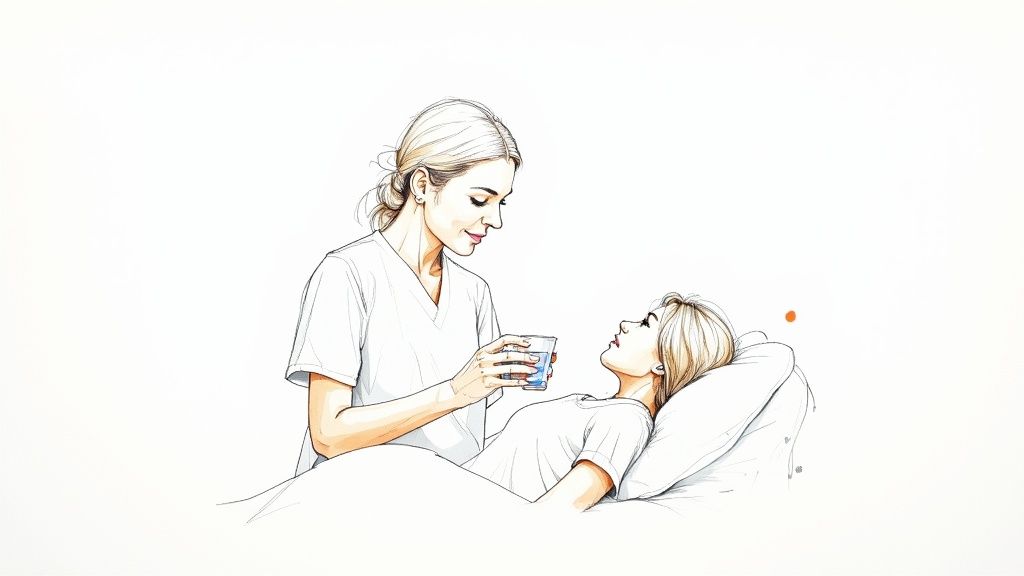
While a registered nurse is often focused on administering medications and developing complex care plans, the CNA is right there on the front lines. They are the ones building trust and a personal connection with patients, making sure they feel safe and comfortable. Their role is a unique mix of providing physical help and being a source of emotional support.
This work requires a massive amount of empathy and an even bigger supply of patience. CNAs spend their days with people who are often vulnerable, in pain, or dealing with difficult health situations. Simply offering a reassuring presence can be just as critical as any of the clinical tasks they perform.
Core Functions and Responsibilities
The specific tasks a CNA handles can shift depending on where they work—a bustling hospital floor is a world away from a quiet, long-term care facility. But no matter the setting, the core duties always revolve around direct, personal patient care.
To give you a clearer picture, here’s a quick breakdown of what CNAs spend most of their time doing.
CNA Core Responsibilities at a Glance
| Responsibility Area | Key Tasks |
|---|---|
| Personal Care | Assisting with bathing, dressing, grooming, and toileting. |
| Vital Signs Monitoring | Accurately taking and recording blood pressure, pulse, temperature, and respiration. |
| Mobility Assistance | Helping patients move safely, from bed to wheelchair, and repositioning them. |
| Nutrition & Hydration | Assisting with meals, tracking food and fluid intake, and accommodating special diets. |
| Observation & Reporting | Noticing and reporting any changes in a patient's condition to the nursing staff. |
As you can see, the role is incredibly varied. A great CNA doesn't just go through a checklist of tasks.
They are the eyes and ears for the rest of the healthcare team. They're trained to observe, listen, and report even small changes in a patient's behavior or health that could signal a much bigger issue.
At the end of the day, being a CNA is all about delivering dignified, compassionate care that supports both the patient and the entire medical team.
A Day in the Life of a Nursing Assistant
To really understand what a CNA does, it helps to step into their shoes for a typical shift. While every day brings something new, there's a certain rhythm to the work that shows you just how demanding—and rewarding—this job can be.
Most shifts kick off before the sun is even up. The first order of business is getting a handover from the night shift, where you learn about each resident's status, any overnight changes, or special needs for the day ahead.
The morning is usually a whirlwind of hands-on, compassionate care. You'll start by helping residents begin their day with dignity. This means assisting with everything from using the restroom and bathing to getting dressed and grooming. This is where you really build trust and a personal connection.
Once everyone is up, the focus turns to breakfast. CNAs are there to set up meal trays, help those who have trouble feeding themselves, and carefully track how much each person eats and drinks. It’s more than just serving food; it’s a crucial time to spot changes in appetite or difficulty swallowing.
Mid-Day Responsibilities and Teamwork
As the day moves on, you'll start your rounds of taking and charting vital signs—things like temperature, pulse, breathing rate, and blood pressure. This information gives the nurses a clear picture of each resident's health. You’ll also be helping people with mobility, whether it's getting them out of bed, moving to a wheelchair, or taking a short walk for exercise.
This part of the day really underscores how much of a team effort this job is. A huge piece of the CNA's role is communicating what you see to the supervising nurse.
If a resident seems unusually tired, is showing any signs of pain, or has a vital sign that’s out of the ordinary, the CNA is often the first to notice and report it. Your keen eye can be the first signal that a care plan needs a second look.
Winding Down the Shift
The afternoon is all about continuing care. You'll be answering call lights, making sure residents are comfortable, and repositioning them often to prevent painful bedsores. This is also a heavy documentation period, where you log every task and observation into the patient charts with precision.
Before your shift wraps up, you'll do a final round to make sure rooms are tidy and residents have everything they need within reach. A CNA's day is a constant balancing act between clinical duties, offering a listening ear, and being a vital, trusted member of the healthcare team.
The Essential Skills Every Great CNA Possesses
Being a great Certified Nursing Assistant is about much more than just ticking boxes on a checklist. It's really a blend of what you can do and who you are. This means you need a solid mix of hands-on technical abilities, often called hard skills, and the personal traits we know as soft skills. To truly excel and provide the best care, you have to be strong in both areas.
Mastering The Hands-On Tasks
Hard skills are the concrete, trainable tasks that are the bread and butter of a CNA's job. These are the skills you’ll learn inside and out during your state-approved training program and what you'll be tested on to get your certification. Think of them as the foundational actions that keep patients safe and cared for, day in and day out.
For instance, a huge part of your daily routine will rely on your clinical precision.
- Taking Vital Signs: You'll need to be spot-on when measuring and recording a patient's temperature, pulse, breathing rate, and blood pressure.
- Patient Mobility: Knowing the right way to safely help someone move from a bed to a wheelchair, or repositioning them to prevent painful bedsores, is an art and a science.
- Infection Control: This is non-negotiable. You’ll live by strict rules for handwashing, hygiene, and using protective gear to keep your patients—and yourself—safe from infection.
The Heart of the Job: Compassion and Communication
While the technical stuff is crucial, what separates a good CNA from a truly exceptional one are the soft skills. These are the interpersonal qualities that build rapport, create trust, and bring genuine comfort to those you care for. Compassion is the fuel; it’s that deep-down desire to help people and alleviate their discomfort.
Just as important is clear, effective communication. It’s a two-way street. You have to be a great listener to understand a patient's worries, but you also need to be able to relay your observations clearly to the nurses and the rest of the care team. This combination of empathy and sharp observation ensures that no little detail slips through the cracks.
A CNA's knack for spotting a subtle shift in a patient's mood, a slight change in their skin tone, or a new behavior can be the very first sign of a brewing health problem. That makes you an absolutely vital set of eyes and ears for the entire medical team.
This infographic does a great job of showing how all these skills—from the clinical tasks to the compassionate support—are woven together in the daily life of a CNA.
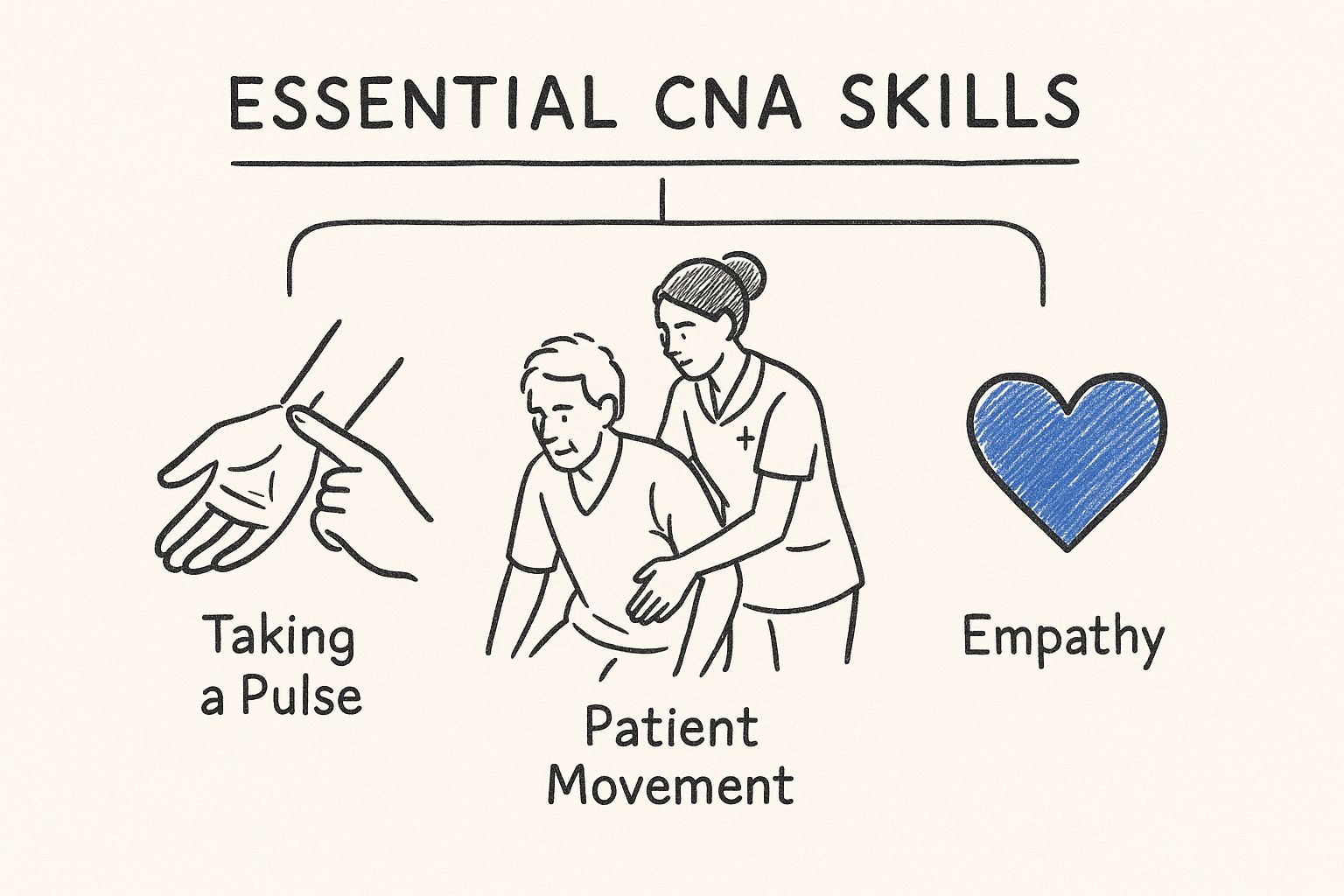
As the image illustrates, patient care is always a balancing act between performing necessary procedures and offering a human touch.
If you're curious about how to frame these skills on a professional application, looking through some nursing CV examples can be a huge help. And for a deep dive into what you'll be tested on, don't miss our CNA skills test checklist.
Where Do CNAs Typically Work?
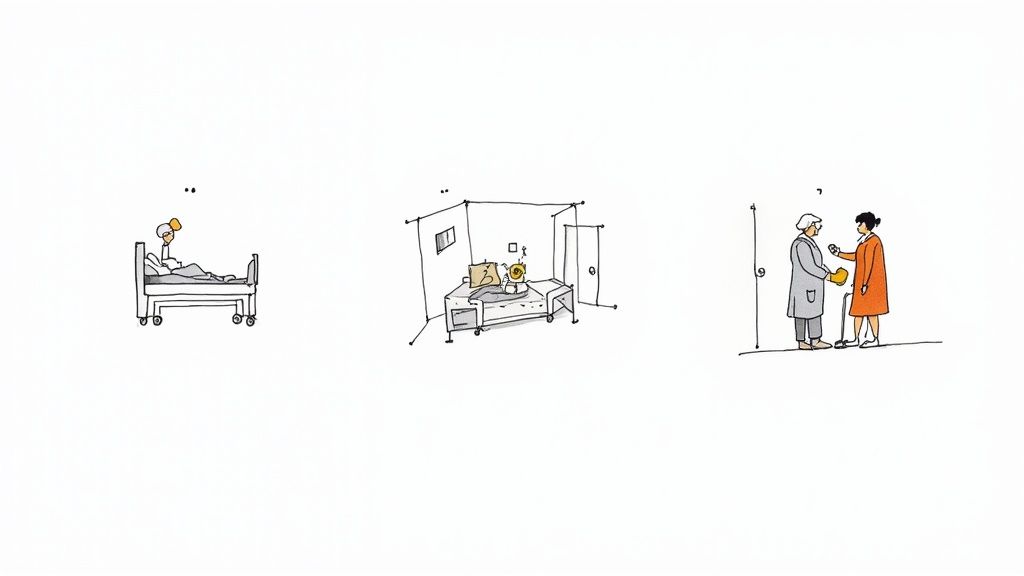
One of the best things about being a CNA is the sheer variety of places you can work. While the core skills of compassionate care are universal, the setting you choose will completely shape your daily experience.
Think of your CNA certification as a passport to the entire healthcare field. It can take you from the bustling, high-stakes environment of a city hospital to the quiet, intimate setting of a client's home. Each environment demands a slightly different focus and offers a unique way to make an impact.
Nursing and Residential Care Facilities
This is the most common path for CNAs, and for good reason. Working in a nursing home or a long-term care facility is all about building relationships and providing a steady, comforting presence.
You're not just caring for patients; you're becoming a vital part of the residents' daily lives. The focus here is on consistent, routine support, helping people with their activities of daily living in a place they call home.
Hospitals and Medical Centers
If you thrive on adrenaline and constant change, a hospital might be the perfect fit. The pace is much faster, and the care is focused on helping patients recover from acute illnesses, injuries, or surgeries.
Your patient turnover is higher, and your days are often unpredictable. You'll work side-by-side with a large team of nurses and doctors, playing a critical role in getting patients stable and ready to go home.
The need for skilled CNAs is stronger than ever. Projections show the field is expected to grow by an impressive 8% through 2030, largely due to the needs of an aging population. This means solid job security and plenty of opportunities across the country. You can read more about the rising demand for CNA jobs on bosmedicalstaffing.com.
Of course, the options don't stop there. Many CNAs find fulfilling careers in other settings, including:
- Home Healthcare Services: This is for the independent CNA who enjoys working one-on-one. You provide personalized care right in the client's home, often forming a very close bond.
- Assisted Living Facilities: A great middle-ground, this environment lets you support residents who have a lot of independence but still need a hand with certain daily tasks.
- Travel Assignments: For the adventurous at heart! If you want to see the country while building your career, find out what a traveling CNA is in our guide.
Your Salary and Career Path as a CNA
Let's talk about the bottom line: compensation. What you earn as a Certified Nursing Assistant isn't a single, fixed number. It really depends on where you are, your level of experience, and the kind of place you work. A CNA at a busy urban hospital, for example, will likely have a different pay scale than one at a rural nursing home. For a deep dive into the numbers, check out our guide on how much CNAs make.
While the starting pay is important, don't forget to look at the bigger picture. The true value of being a CNA is its power as a launchpad. Think of it as your entry ticket into the world of healthcare—a role that gives you the foundational, hands-on experience you can't get anywhere else.
From CNA to More Advanced Roles
One of the best things about becoming a CNA is that it's one of the quickest ways to start working directly with patients. But for most, it's not the final stop. Many healthcare professionals get their start here before climbing the career ladder, using their skills as a springboard for more advanced positions.
Here are a few well-trodden paths people take after getting their start as a CNA:
- Licensed Practical Nurse (LPN): With your CNA experience under your belt, an LPN program is a natural next step. These programs usually take about a year to complete and build directly on the skills you already have.
- Registered Nurse (RN): A very common goal for CNAs is to become an RN. This involves earning an Associate's or Bachelor's degree in nursing, which opens the door to a huge increase in both responsibility and salary.
- Specialized Fields: Your time as a CNA might spark an interest in a different area of healthcare. Many find their calling in specialized roles like physical therapy assistance, medical sonography, or other allied health professions.
The demand for CNAs is solid and isn't going away anytime soon. Projections show a 4–5% growth in jobs between 2022 and 2032. That translates to an estimated 220,000 job openings popping up each year, largely thanks to the needs of an aging population.
When you're mapping out your future, it helps to understand where the CNA role fits within the broader healthcare industry. Seeing the entire system makes it clear just how many doors this one position can open for you.
Got Questions About Being a CNA? We’ve Got Answers.
Thinking about a new career always brings up a ton of questions. If you’re looking into becoming a CNA, you’re probably wondering about the real-world stuff: How long does it take? What are the tough parts? And where can you go from here? Getting straight answers is the best way to figure out if this incredibly important role is the right move for you.
Let’s dive into some of the most common questions we hear from people just starting their journey. Consider this your final check-in before you take the leap.
How Long Does It Take to Become a CNA?
This is one of the best parts about the CNA path—you can get into the healthcare field fast. You're not looking at years of school. Most state-approved training programs are designed to get you certified in just 4 to 12 weeks. It's an intense but quick timeline that makes it a great starting point for so many people.
These programs pack a lot in, mixing classroom learning on everything from patient safety to basic anatomy with crucial, hands-on clinical practice. Once you’ve completed the training, the last step is to pass your state’s certification exam, which has both a written part and a practical skills test. Nail that, and you're officially a CNA.
What Are the Biggest Challenges of This Job?
Let’s be real: being a CNA is incredibly rewarding, but it’s not always easy. The work is physically demanding. You’ll spend long hours on your feet, and you'll need the strength to help lift, move, and support patients. It definitely takes a good deal of stamina.
The emotional side of the job can be just as tough. You’re working closely with people during some of the most vulnerable times of their lives, and that means you'll share in their struggles and, at times, face loss.
It really comes down to empathy and resilience. The CNAs who thrive are the ones who understand that the difficult days are balanced by the incredible difference they make in someone's quality of life. That positive impact is what keeps you going.
Can CNAs Specialize in a Field of Care?
Absolutely! Your initial certification is like a general key that opens the door to healthcare. From there, specializing is a fantastic way to focus your passion, grow your skills, and advance your career. Many CNAs go on to get extra training in areas that are always in need of experts.
Pursuing a specialty can unlock different job opportunities and often comes with a pay bump. Some popular paths include:
- Geriatric Care: Working specifically with the unique health needs of older adults.
- Hospice and Palliative Care: Providing comfort and compassionate support to patients at the end of life.
- Restorative Care: Focusing on helping patients recover their strength and independence after an injury or illness.
- Medication Aide/Technician: With extra training (in certain states), you can become certified to administer medications under a nurse's direction.
Specializing doesn't just make you a more skilled caregiver; it builds a stronger foundation for whatever you want to do next, whether that's becoming an LPN, an RN, or another type of healthcare pro.
At The CNA Guide, we provide the resources you need to confidently plan your career, from finding the perfect training program to navigating certification and beyond. Visit us at https://thecnaguide.com to get started.