Walking into a CNA interview cold is a recipe for disaster. Real preparation isn't about memorizing answers; it's about building a solid foundation of confidence that shines through from the moment you walk in the door. It all starts with deep-diving into the facility you're interviewing with and getting crystal clear on the skills they truly value.
This initial legwork allows you to connect your personal experience to their specific needs, showing them you’re not just another applicant, but the right fit for their team.
Build Your Foundation for a Confident Interview
Feeling prepared for your interview is more than just having a few stories ready. It's about radiating a quiet confidence in your skills and demonstrating why you belong in that specific role. This process starts way before you even think about what to wear. It begins with truly understanding the healthcare environment you want to be a part of.
The CNA role is tough—it's a unique mix of hard physical work and deep emotional strength. Candidates who take the time to practice articulating their experiences, like how they've handled a challenging resident or why they were drawn to caregiving, consistently perform better. Recruiters are looking for that trifecta: solid technical skills, a warm bedside manner, and the grit to handle stress.
Research Beyond the Mission Statement
Sure, every facility has a mission statement on its "About Us" page. But you need to dig deeper if you want to stand out. Your goal is to understand their culture so you can show you’re not just looking for a job, you’re looking for this job.
Here’s where to start your detective work:
- Patient Population: Is this a fast-paced rehab unit, a long-term geriatric facility, or a pediatric wing? Knowing the specific patient demographic helps you tailor your examples to what they see every day.
- Community Reputation: What are people saying? Check out online reviews, news articles, and community forums. Understanding their public perception gives you a peek into their operational strengths and weaknesses.
- Facility Values in Action: Go beyond the corporate jargon. Look at their social media feeds or recent blog posts. Do they highlight employee achievements or community outreach events? These clues tell you what they really care about.
A simple mention of a recent award they won or a community health fair they hosted shows you've done your homework. It’s a small detail that makes a huge impression and sets you miles apart from the competition.
Understanding Core CNA Competencies
Once you know the facility inside and out, it's time to turn the focus back on yourself. You need to connect your skills directly to the core responsibilities of a CNA. Hiring managers are screening for a specific blend of practical skills and personal qualities. A great first step is to refresh your memory on the full https://thecnaguide.com/blog/cna-job-description/ to make sure you can speak to every aspect of the role.
They'll be gauging your command of the basics, like taking vitals, but they're also watching to see how you communicate and show empathy. Today, many of these initial screenings happen over video. If you're feeling nervous about that, check out this no-BS guide on how to do a video interview for some practical tips.
Answering Common CNA Interview Questions

This is your moment to shine. The interview questions are designed to connect your unique experience directly to the everyday challenges and triumphs of the job. Hiring managers will throw a mix of situational, behavioral, and personal questions your way. They aren't just ticking boxes—they want to understand how you think, act, and communicate under pressure.
Your mission is to show them the compassionate, competent, and reliable CNA you are. They’re looking for glimpses of your critical thinking skills, your empathy, and your professionalism. In fact, research shows that around 70% of successful CNA interviews hinge on candidates who clearly demonstrate great communication, a collaborative spirit, and a genuine desire to learn.
Tackling Situational Questions
You’ll almost certainly get a few “what if” scenarios. These hypothetical questions are designed to test your on-the-spot judgment and knowledge of protocol.
For instance, an interviewer might ask, “What would you do if a resident becomes agitated and refuses their medication?” They aren't looking for a perfect answer. They want to see your thought process. A great response shows you prioritize the resident's safety and dignity above all else.
Here’s a solid way to break it down:
- De-escalate First: Explain that you'd stay calm, use a reassuring voice, and try to figure out why they're upset. Is something bothering them? Are they in pain?
- Keep Everyone Safe: You'd ensure the resident and anyone nearby are out of harm's way before trying to gently re-engage.
- Report and Document: Crucially, you’d state that you would report the refusal to the supervising nurse immediately. This is a clinical issue, and it's your job to communicate it up the chain of command and ensure it's documented.
Your answers to these questions should always circle back to two things: patient-centered care and following the facility's protocol. It proves you understand the scope and boundaries of your role as a CNA.
Responding to Behavioral Questions
Behavioral questions ask you to pull from your own past experiences. Think of prompts like, “Tell me about a time you had to deal with a difficult coworker.” The trick is to tell a short, powerful story that paints you as a professional problem-solver.
A simple framework can help keep you on track. Talk about the Situation, the Action you took, and the positive Result (the STAR method).
Let's say a coworker was consistently falling behind on their duties, impacting your workflow. Instead of focusing on their faults, frame your story around teamwork. You could explain how you suggested a quick team huddle with the charge nurse to clarify assignments for the shift. The result? A smoother workflow for the entire team.
This approach turns a tricky question into a chance to show off your maturity and collaborative spirit. It’s no surprise that roughly 60% of CNA hiring managers rely on these questions to find candidates who are resilient and professional.
Answering Personal Questions Authentically
Finally, get ready for questions about you. Why do you want this job? How do you handle stress? These are your opportunities to let your genuine passion for caregiving come through.
Try to avoid generic answers like, "I just want to help people." While true, it doesn’t tell them much. Instead, share a brief, personal story. Maybe a specific experience caring for a a family member is what drew you to this field.
When asked about stress, be honest but professional. Mentioning healthy coping mechanisms—like taking a walk after a tough shift, talking things over with a mentor, or prioritizing good sleep—shows self-awareness. Honing your ability to talk about your skills and motivations is key, and it’s something you’ll need for your practical exams, too. To get more comfortable with this, our https://thecnaguide.com/blog/cna-skills-test-checklist/ can be a huge help.
Making A Professional First Impression
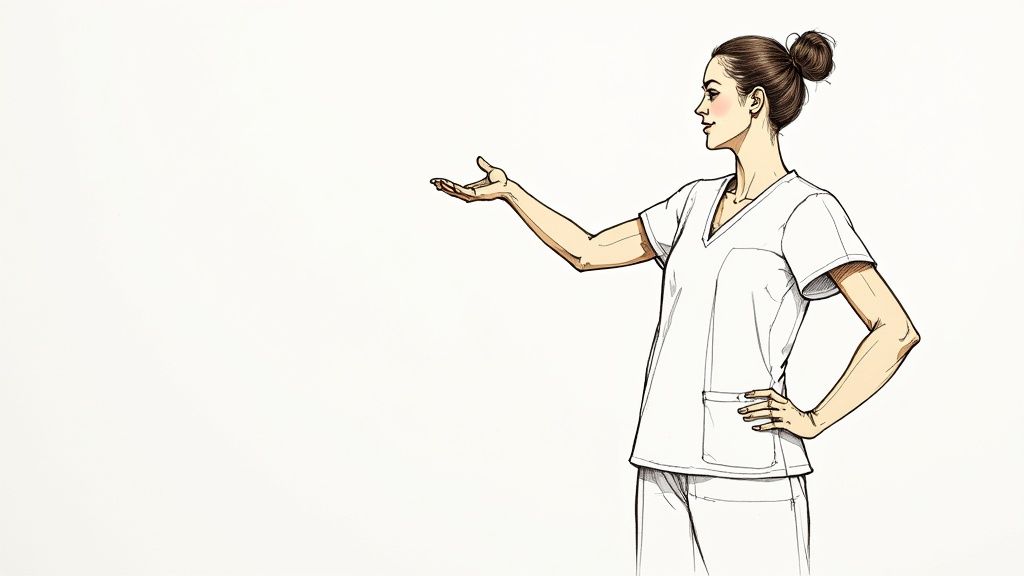
Your interview starts the moment you walk into the room—or appear on screen. Before you say a single word, your outfit and posture tell a story about your dedication to patient care. Small details signal whether you’re organized, respectful, and ready for the responsibilities of a CNA role.
In healthcare, looking clean, neat, and approachable matters more than following the latest fashion trends. You want your clothing to underscore your competence, not distract from what you bring to the table.
Choosing The Right Attire For A CNA Interview
A business‐casual ensemble hits the right note. Think crisp, conservative pieces that demonstrate you’ve put thought into your appearance. Scrubs, while practical on the job, can feel too casual for an interview setting.
To ensure your outfit communicates professionalism, follow these simple do's and don'ts:
- DO choose a well-ironed blouse or button-down shirt in a neutral color like navy, gray, or beige.
- DON'T wear scrubs, gym clothes, or anything too casual.
- DO pair your top with professional dress pants or a knee-length skirt.
- DON'T opt for mini-skirts, shorts, or ill-fitting clothes.
- DO select simple, minimal jewelry and clean, polished closed-toe shoes like flats or loafers.
- DON'T arrive in scuffed sneakers or sandals, or wear large, distracting accessories.
This simple checklist helps ensure your professional skills remain the main focus.
The Power Of Non-Verbal Communication
Your outfit sets the scene, but your body language seals the deal. A confident but gentle handshake communicates you’re comfortable in a clinical setting. During the conversation, adopt these habits:
- Sit up straight and lean in slightly to show active listening.
- Maintain steady eye contact—just enough to convey sincerity.
- Smile warmly when appropriate; it builds instant rapport.
Think of non‐verbal cues as the punctuation of your interview. They emphasize your words and reinforce the caring, attentive professional you are.
When you combine thoughtful attire with purposeful gestures, you send a clear message: you’re dependable, compassionate, and fully prepared for the demands of a CNA position.
Practice Your Answers and Prepare Your Questions
Real confidence in an interview isn’t about memorizing answers word-for-word. It’s earned through practice. The idea is to get so comfortable telling your own stories and hitting your key points that your answers flow naturally, not like you're reading from a script.
When you practice effectively, you're building the muscle memory to communicate your value, even when the pressure is on.
Polish Your Delivery with Mock Interviews
One of the best things you can do is run through a few practice interviews. Grab a friend, family member, or even a classmate to play the role of the interviewer. Hand them a list of common questions and, most importantly, ask them for honest feedback on how you come across.
Can't find a practice partner? No problem. Use your phone. Record yourself answering the questions and then watch it back. It might feel a little awkward at first, but this is an incredibly powerful way to see yourself as the interviewer will.
As you review your practice sessions, pay attention to these things:
- Body Language: Are you sitting up straight? Making good eye contact? Or are you fidgeting and looking down?
- Pacing and Tone: Do you sound genuinely interested and professional? Or are you talking a mile a minute because you're nervous?
- Clarity: Are your answers getting straight to the point, or are you starting to ramble?
Practicing out loud is how you move from remembering an answer to just telling your story. That shift makes a huge difference to a hiring manager. It sounds genuine because it is.
This whole process is about making sure your delivery is just as strong as your skills and experience.
Ask Questions That Show You’re a Pro
Toward the end of the interview, you’ll almost always hear, "So, do you have any questions for me?" This is your moment. It’s your chance to show you’re not just looking for any job, but that you're a serious professional evaluating if they are the right fit for you.
Try to avoid asking about pay or vacation days right off the bat. Instead, ask questions that prove you're thinking about the role, the team, and how you can contribute. It definitely helps to have a baseline understanding of industry norms. For instance, knowing a bit about how much CNAs make on average in your area can help set your own expectations later on.
Here are a few great questions that show you’re thinking like a dedicated caregiver:
- "What is the typical patient-to-CNA ratio on this unit for both day and night shifts?"
- "How does this facility support professional development or continuing education for its CNAs?"
- "Could you tell me a bit about the team dynamic between the CNAs and the nursing staff?"
- "What does success look like for a CNA in this role, and what is the onboarding process like?"
Questions like these tell the interviewer that you care about patient safety, you’re invested in your own growth, and you understand the importance of teamwork. You’ll come across not just as another candidate, but as a future colleague looking for a place to build a career.
Managing Interview Day and Following Up
The big day is here. All your hard work researching and practicing has led to this moment. Now, it's all about execution—managing the little things that leave a huge impression, from when you walk in the door to your final handshake.
A calm, collected approach shows the hiring manager you have the composure and professionalism needed to be a great CNA. Small details can make or break your first impression. A great example is your arrival time. It's best to show up about five to ten minutes early. This proves you're punctual but doesn't put pressure on the staff by making them feel rushed. For more on this, it's worth understanding the '5-minute rule' for interview arrival.
What to Bring With You
Never walk into an interview empty-handed. Showing up with a few key items in a simple, professional folder instantly signals that you're prepared and take this opportunity seriously.
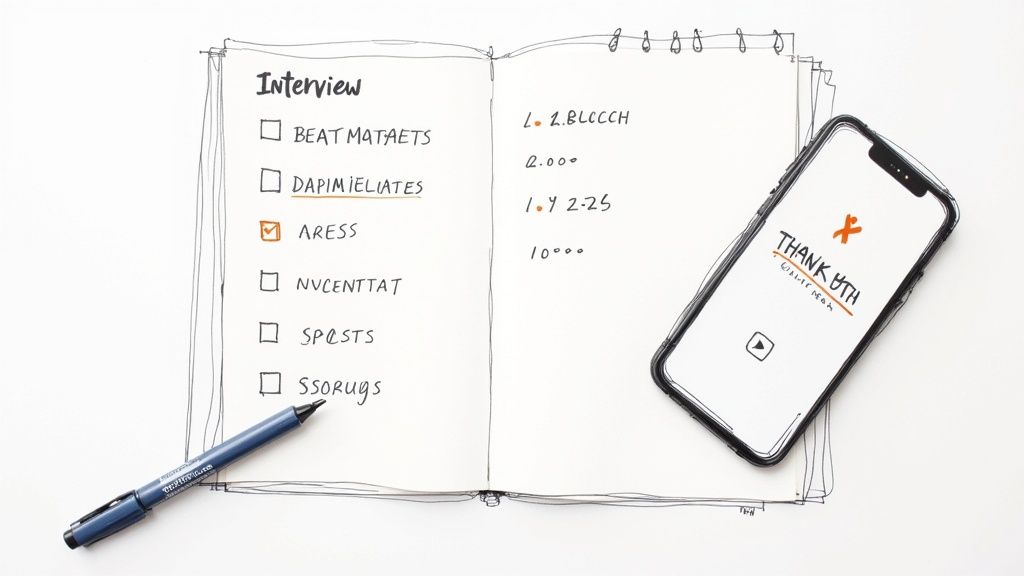
Here's a quick checklist of what I always recommend bringing along:
- Extra Resumes: Have at least three clean copies ready. You might end up speaking with more people than you expect.
- Your CNA License and Certifications: Don't make them ask. Have copies of your license, CPR card, and anything else relevant on hand.
- A Notepad and Pen: This isn't just for show. Jotting down a few notes or referring to your pre-written questions shows you're engaged and an active listener.
- A List of References: Keep a printed copy of your references ready to go, just in case they ask for it on the spot.
Having these documents ready prevents that awkward moment of fumbling through your bag. It’s a small touch, but it screams confidence and preparation.
Remember, interviews have changed. Many facilities now conduct initial screenings or even full interviews over the phone. These calls can last anywhere from 18 to 46 minutes, so be ready to convey your professionalism and warmth without being in the room.
Crafting The Perfect Follow-Up
The interview isn't over when you walk out the door. It’s over after you’ve sent a thank-you note. This simple act of professional courtesy is surprisingly rare, and it’s one of the best ways to stand out and stay top-of-mind.
Your goal is to send a short, personalized email within 24 hours. Any later, and the impact starts to fade.
A great thank-you email really only needs to do three things well:
- Show Genuine Gratitude: A simple "Thank you for your time" goes a long way. Acknowledge the opportunity to speak with them and learn more about the role.
- Mention Something Specific: This is key. Reference a particular point from your conversation—maybe it was the facility's unique approach to patient-centered care or something you liked about the team dynamic. It proves you were listening.
- Reiterate Your Excitement: End on a high note by restating your strong interest in the CNA position and briefly reminding them why you’d be a great addition to their team.
This thoughtful gesture reinforces the positive impression you worked so hard to make and leaves the hiring manager with a final reminder of your professionalism.
Frequently Asked CNA Interview Questions
Alright, you've done the prep work and are feeling almost ready. But what about those last-minute "what if" questions that can pop into your head right before the interview? Let's tackle some of the most common ones so you can walk in feeling completely confident.
What Documents Should I Bring to a CNA Interview?
Never show up empty-handed. I always tell people to bring a simple, professional folder with all their key documents inside. It’s a small thing, but it screams "organized and serious" to a hiring manager.
Here's a quick checklist of what should be in that folder:
- A few extra copies of your resume, printed on nice paper. You never know who you might meet.
- Your CNA license or certification.
- Your current CPR card.
- A clean, easy-to-read list of your professional references, complete with their contact info.
Having everything on hand means you’re ready for anything they ask for. No frantic digging through a bag or purse—just smooth, professional, and prepared. It makes a great first impression.
How Should I Answer the Salary Expectations Question?
Ah, the money question. It can feel awkward, but it doesn't have to be. The key is to do a little bit of homework before you go. You need to know the going rate for CNAs in your city and for the type of facility you're interviewing with. A hospital CNA in a major city might make more than one in a rural nursing home, for example.
The best strategy is to offer a range, not a single, rigid number.
Try saying something like this: "Based on my research for CNA roles in this area, and considering my experience, I’m looking for a salary in the range of $X to $Y per hour."
This shows you've done your homework and are realistic, but it also keeps the door open for negotiation. You sound informed and confident, not demanding.
What If I Don’t Know the Answer to a Question?
First off, don't panic. It's completely okay—and totally normal—not to have a perfect answer for every single question. In healthcare, honesty is always, always the best policy. Making something up is a huge red flag because it suggests you might do the same in a critical patient care situation.
If you get a question that stumps you, take a breath. It’s fine to be honest.
Say something like, "That's a great question. While I haven't personally faced that specific scenario yet…" Then, immediately follow up with how you would handle it: "…my first step would be to ensure the resident is safe. Then, I would immediately find the charge nurse or check the facility's protocol to make sure I followed the correct procedure."
This turns a moment of uncertainty into a major win. You’ve just demonstrated honesty, critical thinking, and a clear understanding of the chain of command—all things a hiring manager is looking for.
At The CNA Guide, we provide clear, reliable resources to help you succeed at every stage of your career. From finding the best training programs to acing your interviews, we're here to support your journey. Explore our free guides and state-specific information.