As a Certified Nursing Assistant, you are on the front lines of patient care, providing the essential support that holds the healthcare system together. While your initial CNA credential is a powerful starting point, the path to higher earnings, more responsibility, and greater career satisfaction is paved with specialized knowledge.
This is where specialty certifications for CNAs come in. These credentials are more than just extra letters after your name; they are strategic investments that unlock new opportunities in high-demand fields like dementia care, hospice, and acute hospital settings. They prove your commitment to the profession and a mastery of specific skills that employers actively seek and are often willing to pay more for.
This guide is your roadmap to leveling up. We will walk you through seven of the most valuable specialty certifications for CNAs, breaking down exactly what you'll learn, the eligibility requirements, and the career impact of each one. You will find a clear, actionable path to advance your skills, increase your earning potential, and turn your job into a lifelong profession. We've included direct links and practical details for each certification to help you get started immediately.
1. Hospice & Palliative Credentialing Center (HPCC) – CHPNA
For Certified Nursing Assistants dedicated to providing compassionate end-of-life care, the Certified Hospice and Palliative Nursing Assistant (CHPNA) credential is the gold standard. Offered by the Hospice & Palliative Credentialing Center (HPCC), this certification is one of the most respected specialty certifications for CNAs in this field. It formally recognizes your advanced skills and commitment to a challenging yet deeply rewarding area of healthcare.
The CHPNA isn't an entry-level certification. It's designed for experienced CNAs who have already immersed themselves in this specialized practice. This focus on proven experience is what makes it so valuable to employers seeking highly competent staff. For CNAs considering the CHPNA certification, it's essential to grasp the nuances, including the differences between palliative care and hospice.
Key Features and Requirements
HPCC provides a clear, structured pathway to certification, making it easy for applicants to understand the process.
- Eligibility: To qualify, you must have recent, relevant experience. Applicants need a minimum of 500 hours of hospice and palliative CNA practice in the last 12 months, or 1,000 hours in the last 24 months, all supervised by a Registered Nurse.
- Structured Testing: The exam is offered during three specific testing windows each year: March, June, and September. This requires planning, as you must meet the application deadline for your chosen window.
- Pricing: The exam fee is $225 for members of the Hospice and Palliative Nurses Association (HPNA) and $295 for non-members. HPCC also offers a "ReTEST Assured" option for an additional fee, allowing a free retake if you don't pass on the first attempt.
Why It Stands Out
What makes the HPCC platform a top choice is its national recognition and rigorous standards. Unlike general continuing education, the CHPNA is a formal credential that verifies your expertise through a comprehensive exam. It tells employers that you possess specialized knowledge in pain management, symptom control, and emotional support for patients and their families. This can significantly enhance your career prospects and earning potential within hospice organizations and palliative care units. Some states may also allow these certification hours to count towards your continuing education requirements. To see how this might apply to you, learn more about CNA continuing education units.
Practical Tip: Before applying, carefully document your work hours and ensure your supervising RN is available to verify them. Organize your documentation well in advance of the application deadline to avoid last-minute issues.
Pros:
- Nationally recognized and respected by hospice employers
- Verifies a high level of specialized skill and knowledge
- Transparent eligibility requirements and application process
Cons:
- Requires significant recent experience, making it unsuitable for new CNAs
- Fixed testing windows may cause delays for some applicants
Website: advancingexpertcare.org/hpcc/credentials/chpna/
2. National Council of Certified Dementia Practitioners (NCCDP) – CDP
For Certified Nursing Assistants who are passionate about supporting individuals with Alzheimer's and other forms of dementia, the Certified Dementia Practitioner (CDP) credential is a highly sought-after qualification. Offered by the National Council of Certified Dementia Practitioners (NCCDP), this is one of the most prominent specialty certifications for CNAs focused on memory care. It formally acknowledges your expertise in person-centered care and your dedication to this growing and vulnerable patient population.
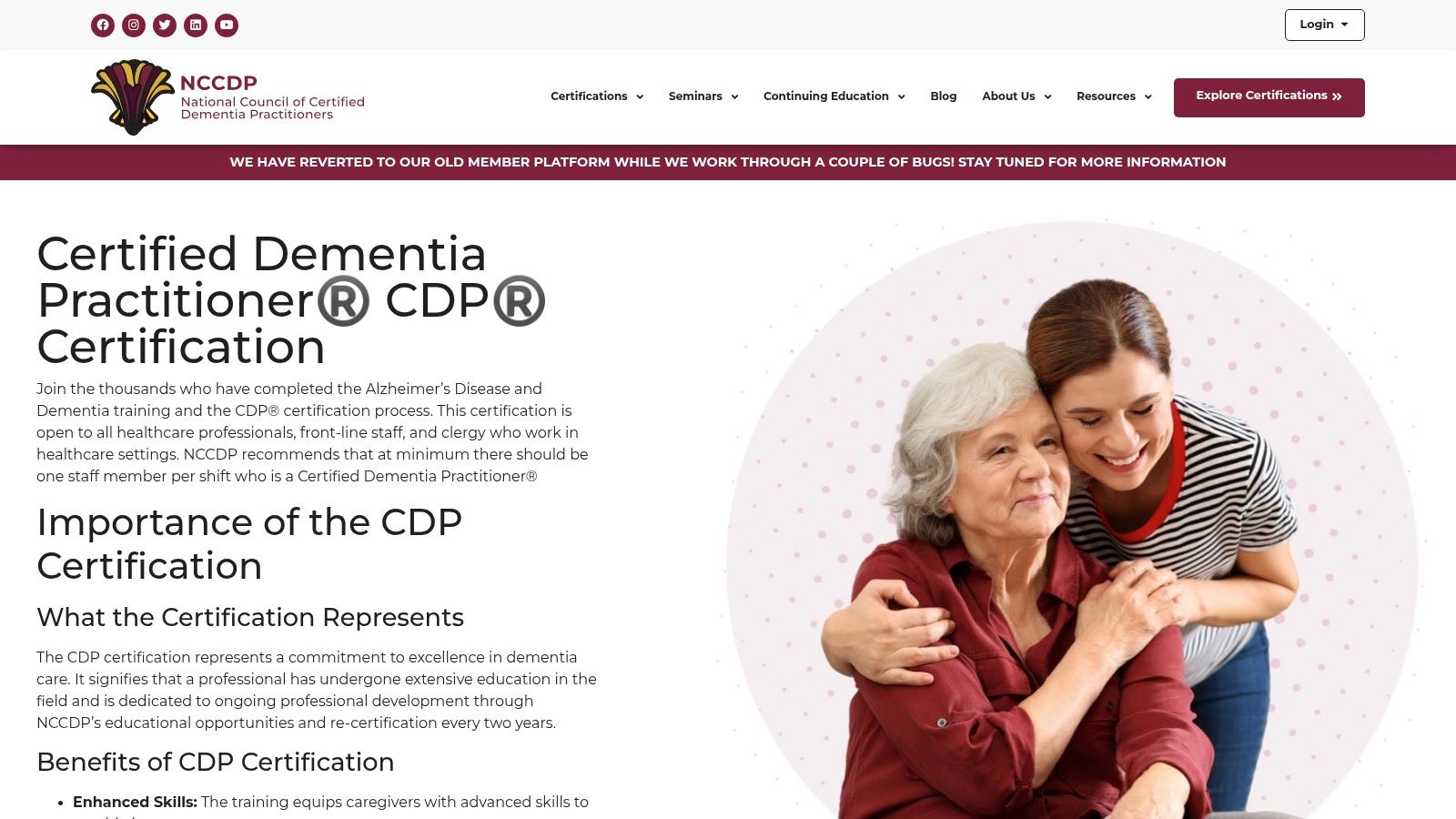
The CDP is not an entry-level credential; it is designed for healthcare professionals who have already gained practical experience in the field. This prerequisite ensures that certified practitioners have a foundational understanding of the day-to-day challenges and rewards of dementia care. For CNAs aiming to specialize, mastering strategies for effective communication and compassionate support is crucial. To deepen your understanding, you can explore detailed advice on how to work with dementia patients.
Key Features and Requirements
The NCCDP website clearly outlines the steps to becoming a CDP, making the application process straightforward for qualified candidates.
- Eligibility: Applicants must have at least one year of paid experience working in a geriatric healthcare setting. A key requirement is the successful completion of the NCCDP's official Alzheimer’s Disease and Dementia Care (ADDC) seminar, which can be taken live online or in person through a certified instructor.
- Application Process: The application is submitted online after completing the mandatory seminar. The cost for the CDP application is $135, which is separate from the cost of the ADDC seminar itself. The certification is valid for two years.
- Group Discounts: NCCDP offers a streamlined process and potential discounts for employers or facilities looking to certify a group of staff members, which is ideal for organizations committed to elevating their standard of memory care.
Why It Stands Out
The CDP certification stands out due to its strong brand recognition across a wide range of care settings, including long-term care facilities, home care agencies, and assisted living communities. It signifies that a CNA has invested in specialized training beyond the basic requirements, covering topics like communication techniques, behavior management, and person-centered care planning. This credential can make you a more competitive job applicant and an invaluable asset to any memory care team, potentially leading to leadership opportunities or roles with greater responsibility.
Practical Tip: The ADDC seminar is the first and most critical step. Use the NCCDP's online calendar to find a certified instructor and training date that fits your schedule. Complete the seminar before starting your online application to ensure a smooth process.
Pros:
- Strong brand recognition and acceptance in diverse healthcare settings
- Focuses on practical, person-centered care techniques
- Streamlined application and renewal process with corporate options available
Cons:
- Requires at least one year of paid experience, excluding new CNAs
- The mandatory ADDC seminar is a separate, required step with its own cost
Website: www.nccdp.org/cdp/
3. Alzheimer’s Association – essentiALZ Dementia Care Training & Certification
For Certified Nursing Assistants working with the growing population of adults with dementia, the Alzheimer’s Association’s essentiALZ certification is an accessible and highly relevant credential. This program is designed for frontline caregivers and provides foundational, person-centered dementia care knowledge. It is one of the most practical specialty certifications for CNAs focused on this critical area of healthcare, demonstrating a caregiver's dedication to quality memory care.
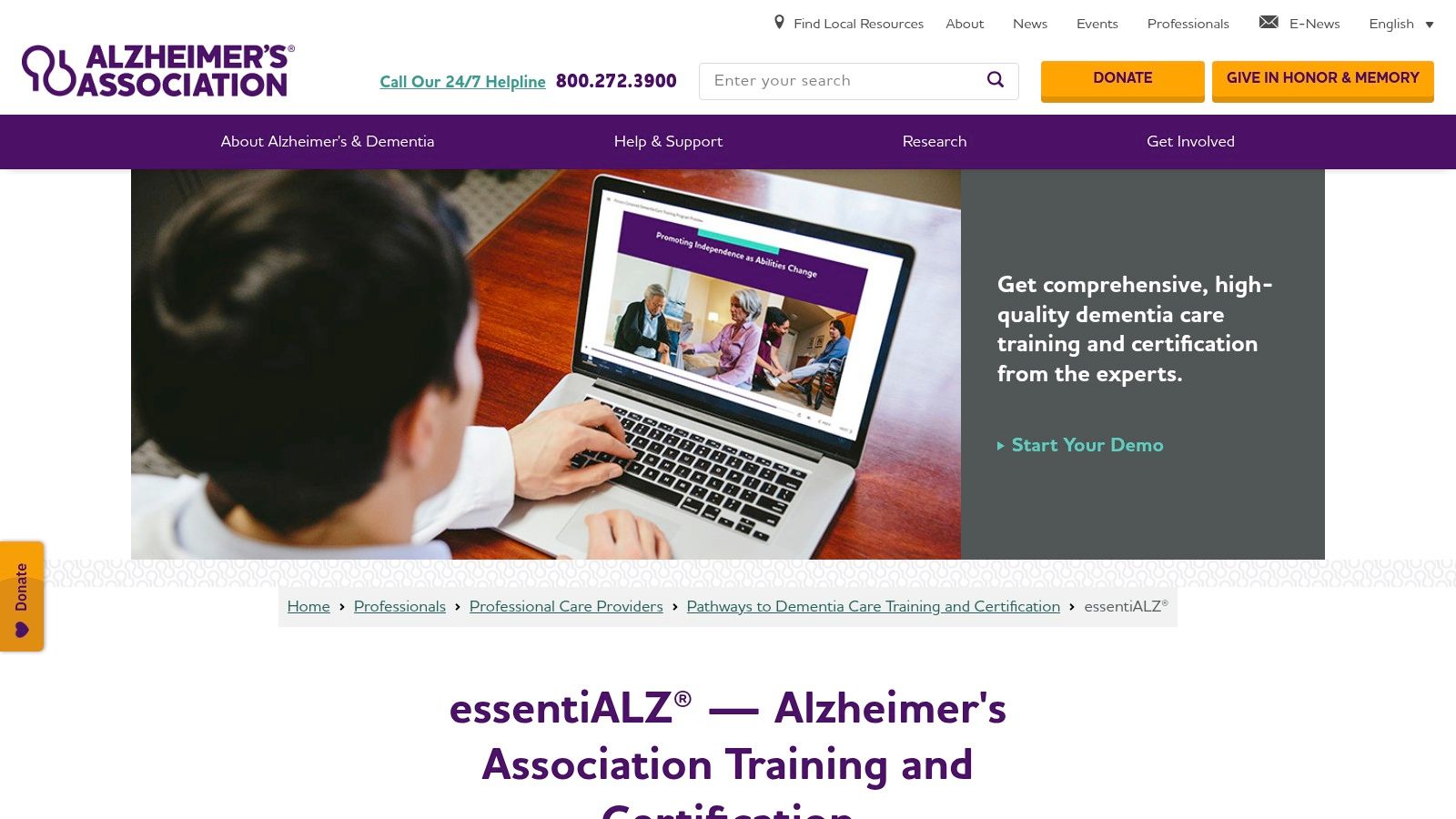
The essentiALZ program combines comprehensive online training with a certification exam, making it a flexible option for busy CNAs. The curriculum is based on the nationally recognized Dementia Care Practice Recommendations, ensuring the content is evidence-based and up-to-date. The essentiALZ certification provides CNAs with critical knowledge to recognize the signs that memory care is needed, enabling them to better support residents and their families.
Key Features and Requirements
The Alzheimer's Association offers a straightforward, self-paced path to certification that can be completed entirely online.
- Eligibility: The program is open to all frontline caregivers, including CNAs, with no prior experience requirements. This makes it an excellent choice for both new and experienced professionals looking to specialize.
- Comprehensive Training: The online training covers dementia basics, person-centered care, activities of daily living (ADLs), communication strategies, and managing behavior changes. The program takes approximately 4 hours to complete.
- Pricing: Individual certification costs $69.95, which includes the training modules and the exam. Significant volume discounts are available for organizations purchasing training for their staff.
- Certification Exam: To earn the certification, you must pass a 45-question multiple-choice exam with a score of 90% or higher. The certification is valid for two years.
Why It Stands Out
What makes the essentiALZ program a top choice is its backing by the Alzheimer’s Association, the leading voluntary health organization in Alzheimer's care, support, and research. This affiliation gives the certification strong recognition among employers in long-term care, assisted living, and home health agencies. Unlike more intensive board certifications, its online format and focus on practical skills make it highly accessible for working CNAs. It directly equips you with the tools to handle challenging situations with empathy and expertise, improving the quality of life for those you care for.
Practical Tip: Take detailed notes during the training modules. Since a 90% score is required on the exam, having organized notes on key topics like communication techniques and behavioral triggers will be invaluable when preparing for the test.
Pros:
- Backed by the highly respected Alzheimer's Association
- Fully online, self-paced format is convenient for working CNAs
- Affordable with no prerequisite experience required
Cons:
- It is a knowledge-based certification, not a hands-on clinical board certification
- Requires renewal every two years to remain active
4. Nephrology Nursing Certification Commission (NNCC) – CCHT
For Certified Nursing Assistants drawn to the technical and life-sustaining field of dialysis, the Certified Clinical Hemodialysis Technician (CCHT) credential is a critical career milestone. Offered by the Nephrology Nursing Certification Commission (NNCC), this is one of the most vital specialty certifications for CNAs working in nephrology care. It provides formal, national recognition of your competence in operating hemodialysis equipment and providing essential care to patients with kidney failure.
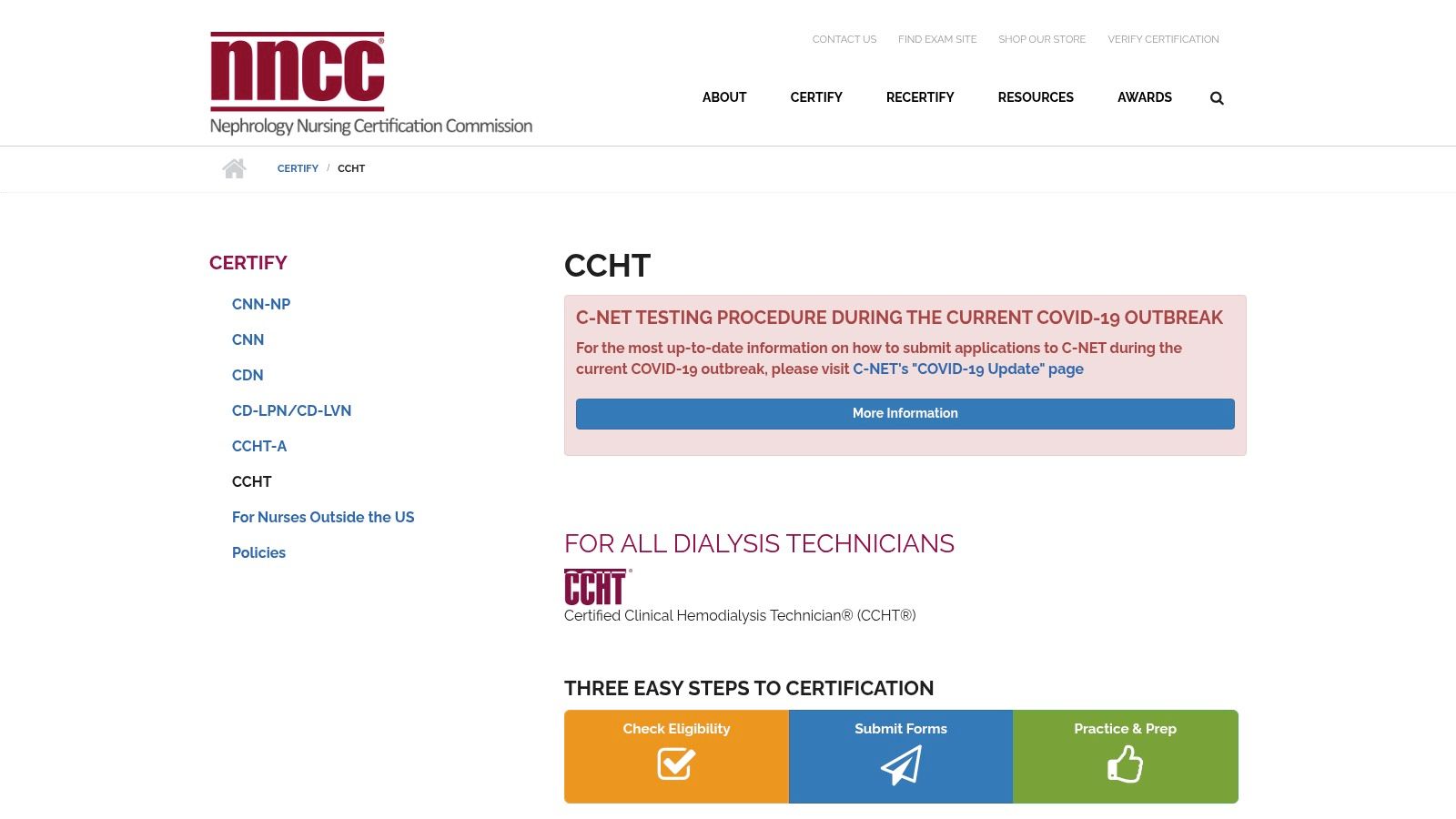
The CCHT is designed for technicians who are on the front lines of dialysis treatment. Earning this certification demonstrates a high level of proficiency and adherence to federal standards, making certified individuals highly sought after by dialysis clinics, hospitals, and other nephrology-focused healthcare settings. It validates that a CNA has the specialized skills needed to manage complex machinery and care for a vulnerable patient population.
Key Features and Requirements
The NNCC website provides a clear, professional pathway for CCHT certification, with detailed handbooks and study resources available.
- Eligibility: To qualify, you need a high school diploma or GED and must have successfully completed a dialysis technician training program. This program must meet specific CMS requirements for content and supervised clinical hours.
- Structured Testing: The CCHT exam is administered via computer-based testing at designated centers, offering flexibility in scheduling. The exam fee is $225 for the initial application, with a re-examination fee of $200 if needed.
- Recertification: The CCHT credential is valid for three years. To maintain it, technicians must complete 30 hours of relevant continuing education and pay a recertification fee, or they can opt to retake the exam. This ensures knowledge remains current with evolving technology and best practices.
Why It Stands Out
What distinguishes the NNCC platform is its status as a widely recognized and CMS-approved national certification body. Holding a CCHT credential is often a non-negotiable requirement for employment in dialysis centers. The certification confirms you have mastered critical skills, including patient assessment, vascular access, dialysis machine operation, and water treatment principles. This specialized knowledge directly translates to enhanced patient safety and improved treatment outcomes, significantly boosting a CNA's career prospects and earning potential in the field of nephrology. The NNCC's provision of practice exams and study outlines also provides excellent support for applicants.
Practical Tip: When you begin your dialysis training program, start a dedicated folder for all your documentation, including training certificates, proof of clinical hours, and supervisor contact information. The CCHT application requires detailed proof, and having it organized from day one will streamline the process significantly.
Pros:
- Nationally recognized credential, essential for employability in dialysis centers
- Verifies advanced, role-specific technical skills
- Clear and flexible recertification pathways (continuing education or exam)
- Offers helpful study resources and practice exams
Cons:
- Requires completion of a specific dialysis training program, not just general CNA experience
- Application processing and approval can take several weeks to complete
Website: www.nncc-exam.org/certification/ccht
5. National Healthcareer Association (NHA) – CPCT/A
For CNAs looking to broaden their skill set and transition into acute care settings like hospitals, the Certified Patient Care Technician/Assistant (CPCT/A) credential from the National Healthcareer Association (NHA) is a powerful next step. This certification validates a multi-skilled professional capable of performing tasks beyond the traditional CNA scope, making it one of the most versatile specialty certifications for CNAs aiming for hospital-based roles. It formally recognizes your competency in areas like EKG monitoring, phlebotomy, and advanced patient care.
The CPCT/A is designed to bridge the gap between a CNA and a more comprehensive patient care role. It signals to employers that you have the validated skills needed for a fast-paced environment, from patient transport to performing crucial diagnostic support tasks. This credential demonstrates a proactive approach to career growth and a commitment to acquiring a wider range of clinical abilities. To get a better sense of the foundational skills this builds upon, you can review a typical CNA skills test checklist.
Key Features and Requirements
NHA provides a complete ecosystem for certification, including robust study materials and a clear path to obtaining the credential.
- Eligibility: To qualify, you must have a high school diploma or equivalent and have completed a patient care technician training or education program within the last five years. Alternatively, you can have one year of supervised work experience in the field within the last three years.
- Comprehensive Skill Validation: The exam covers a wide range of topics, including patient care (vitals, hygiene), safety, phlebotomy-related skills, EKG monitoring, and communication.
- Preparation Resources: NHA offers a suite of official study materials, including study guides, practice tests, and mobile apps. This allows candidates to thoroughly prepare and identify areas where they need more focus. NHA certifications are accredited by the National Commission for Certifying Agencies (NCCA).
Why It Stands Out
NHA is a top-tier choice because of its national recognition and its focus on creating well-rounded healthcare professionals. The CPCT/A credential is not just an add-on; it represents a significant expansion of a CNA's scope of practice. Holding this NCCA-accredited certification makes you a more attractive candidate for hospital jobs, which often require these diversified skills. Furthermore, NHA offers a membership that includes access to a continuing education library and discounts on recertification, supporting your long-term career development.
Practical Tip: Take advantage of NHA's official practice tests. They are designed to mimic the format and content of the actual exam, providing invaluable insight into your readiness and helping you manage your time effectively during the test.
Pros:
- Broadly recognized credential in U.S. hospitals and acute care facilities
- Robust preparation resources and continuing education options
- Validates a wide range of in-demand clinical skills beyond basic CNA duties
Cons:
- May require additional training beyond a standard CNA program to be fully prepared
- Exact exam pricing can vary depending on the testing site or school program
Website: nhanow.com/certification/nha-certifications/certified-patient-care-technician-assistant-(cpct-a)
6. Positive Approach to Care (Teepa Snow) – PAC Certifications & Champion Courses
For CNAs passionate about dementia care, the training and certifications offered by Teepa Snow's Positive Approach to Care (PAC) are transformative. Rather than a single exam, PAC provides a complete educational pathway designed to build hands-on skills for connecting with and supporting individuals living with brain change. This approach makes it one of the most practical and respected specialty certifications for CNAs in memory care.
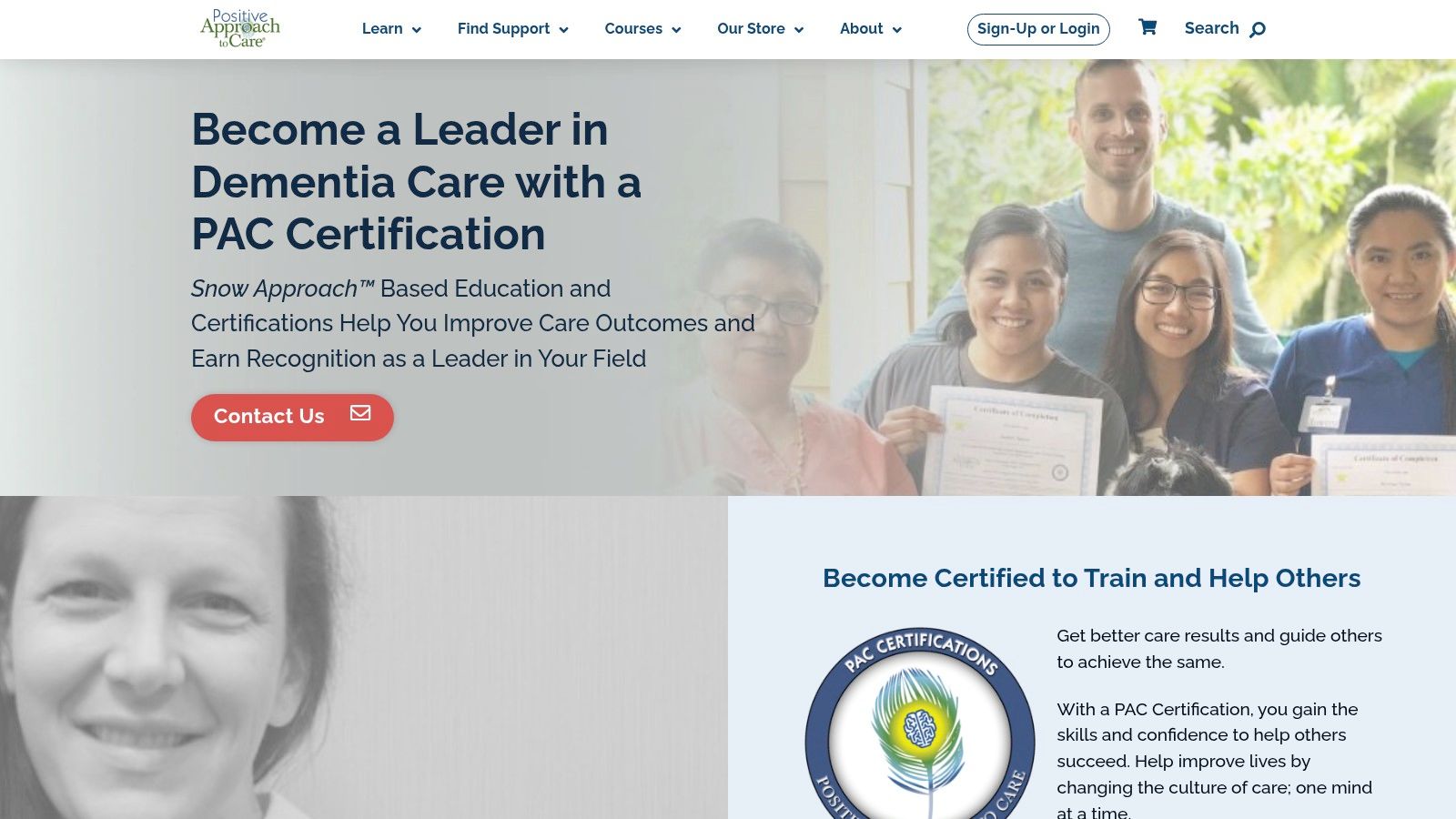
The PAC framework is built on a deep understanding of how dementia affects the brain, translating complex neuroscience into simple, effective techniques. This focus on "doing" rather than just "knowing" is what makes PAC training so valuable to CNAs and the facilities that employ them. It equips caregivers with the tools to de-escalate challenging situations, foster positive interactions, and preserve the dignity of residents.
Key Features and Requirements
PAC offers a unique, stepwise learning journey that allows CNAs to build their expertise over time, with clear milestones and recognition along the way.
- Structured Pathway: The system is tiered, starting with foundational courses and moving toward advanced certification. It often begins with earning a "Champion" designation in specific skills before progressing to higher levels like becoming a PAC Certified Independent Professional.
- Flexible Formats: Training is available in various formats to suit different learning styles and schedules, including online self-paced courses, live webinars, and in-person workshops.
- Pricing: Costs vary significantly depending on the level of training. Foundational online courses may start under $100, while intensive, multi-day certification workshops can cost over $2,000. Annual recertification is required to maintain credentials, which also has an associated fee.
- Digital Recognition: Many of the completed courses and milestones, like becoming a Champion, issue verifiable digital badges through platforms like Credly.
Why It Stands Out
What distinguishes PAC is its unwavering focus on practical, person-centered skills that can be applied immediately. The techniques, developed by world-renowned dementia expert Teepa Snow, are widely adopted by leading memory care providers. Earning a PAC credential signals to employers that a CNA possesses not just theoretical knowledge, but demonstrated competence in managing the real-world complexities of dementia care.
This stepwise approach allows CNAs to start small, perhaps with a single Champion course, and build their credentials as their budget and schedule allow. The skills learned can dramatically improve job satisfaction and reduce caregiver burnout by providing effective strategies for difficult situations.
Practical Tip: Start with an introductory online course or a Champion workshop to see if the PAC philosophy and teaching style are a good fit for you. This is a low-cost way to gain valuable skills before committing to a more expensive full certification path.
Pros:
- Highly practical, skills-based methods widely used by employers
- Tiered structure offers multiple entry points for different career levels
- Flexible online and in-person training formats available
Cons:
- Full certification pathways can be a significant financial investment
- Requires annual recertification to maintain active status
Website: teepasnow.com/resources/for-professionals/
7. American Heart Association (AHA) – HeartCode BLS / Basic Life Support (BLS)
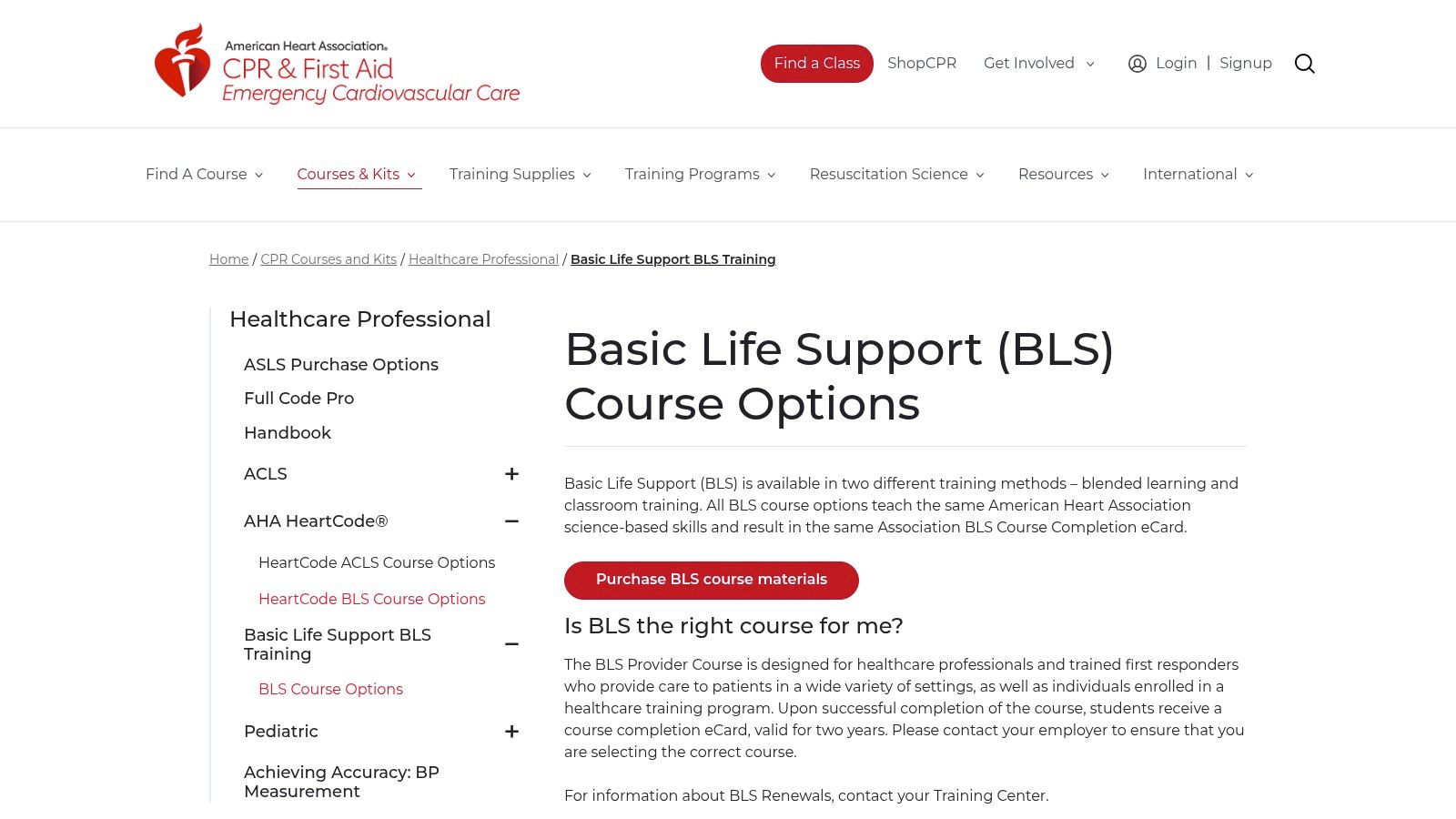
While not always viewed as a "specialty" in the same vein as dementia or palliative care, a Basic Life Support (BLS) certification is a non-negotiable requirement for nearly every healthcare employer. The American Heart Association (AHA) is the universally recognized gold standard for BLS training, and its certification is a fundamental credential that every CNA must maintain. It formally validates your ability to respond effectively in life-threatening emergencies, such as cardiac arrest.
The AHA’s HeartCode BLS program offers a modern, blended-learning approach that respects the busy schedules of healthcare professionals. This format combines a comprehensive online cognitive portion with a mandatory in-person skills session. This dual approach ensures you not only understand the theory behind high-quality CPR and resuscitation but can also physically perform these life-saving techniques correctly. This is one of the most essential specialty certifications for CNAs, forming the foundation of patient safety.
Key Features and Requirements
The AHA provides a streamlined and flexible path to obtaining or renewing this crucial certification, accommodating various learning preferences.
- Eligibility: There are no formal prerequisites to take a BLS course, making it accessible to aspiring CNAs, current students, and seasoned professionals needing recertification.
- Blended Learning Format: The HeartCode BLS model allows you to complete the educational component online at your own pace. Afterward, you must schedule and complete a hands-on skills session with a certified AHA instructor to demonstrate proficiency.
- Pricing: The cost of the online HeartCode BLS portion is typically around $34, purchased directly from the AHA website. However, the hands-on skills session is priced separately by local AHA Training Centers, and fees can vary significantly by location, often ranging from $50 to $100 or more.
- Certification: Upon successful completion of both components, you are issued a BLS Provider eCard, which is valid for two years.
Why It Stands Out
The American Heart Association's platform is the undisputed leader because its certification is accepted by virtually every healthcare employer in the United States without question. While other organizations offer CPR training, the AHA's curriculum is evidence-based and sets the national standard for resuscitation science. The HeartCode BLS option provides significant flexibility, allowing CNAs to minimize time spent in a classroom, which is a major benefit for those juggling difficult work schedules. This blended format ensures a high standard of competence by combining convenient online learning with essential hands-on practice.
Practical Tip: When purchasing the HeartCode BLS course online, immediately use the AHA's "Find a Training Center" tool to locate and schedule your in-person skills session. These sessions can fill up quickly, so booking in advance ensures you can complete your certification without any delays.
Pros:
- Universally accepted and required by U.S. healthcare employers
- Flexible blended learning format saves time in the classroom
- Certification is based on the latest resuscitation science and guidelines
Cons:
- It is not a 100% online certification; a hands-on skills test is mandatory
- The total cost can vary widely depending on the local Training Center's fees for the skills session
Website: cpr.heart.org/en/courses/basic-life-support-course-options
A Quick Look at Top CNA Specialty Certifications
To help you compare these valuable credentials at a glance, here’s a brief summary of who each certification is best suited for and its primary benefit.
- CHPNA (Hospice & Palliative): Ideal for experienced CNAs in end-of-life care. Its key advantage is being a highly respected, nationally recognized credential that validates specialized skills in a challenging field.
- CDP (Dementia Practitioner): Best for CNAs with geriatric experience in memory care or long-term care. It offers strong brand recognition and focuses on practical, person-centered care techniques.
- essentiALZ (Dementia Care): Perfect for any frontline CNA, especially those new to dementia care. It is an affordable, fully online, and highly accessible certification from the trusted Alzheimer's Association.
- CCHT (Hemodialysis Tech): Suited for CNAs transitioning into dialysis clinics. This certification is often a mandatory requirement for employment, making you highly employable in the nephrology field.
- CPCT/A (Patient Care Tech): Excellent for CNAs aiming for hospital or acute care roles. It validates a broad range of clinical skills beyond basic CNA duties, like phlebotomy and EKG monitoring.
- PAC (Positive Approach to Care): A great choice for CNAs seeking in-depth, hands-on dementia care skills. Its focus on practical, proven methods from Teepa Snow makes it highly valued by leading memory care providers.
- AHA BLS (Basic Life Support): A foundational, non-negotiable certification for every CNA. It is the universally accepted gold standard for emergency response and is required by virtually all healthcare employers.
Taking the Next Step in Your CNA Career
Your journey as a Certified Nursing Assistant is the bedrock of hands-on patient care, but it doesn't have to stop there. As we've explored, obtaining specialty certifications for CNAs is the single most powerful strategy for elevating your skills, increasing your earning potential, and unlocking new professional opportunities. These credentials are far more than just acronyms to add to your name badge; they are a testament to your commitment to excellence and your dedication to serving vulnerable patient populations with specialized expertise.
From the compassionate end-of-life support provided by a Certified Hospice and Palliative Nursing Assistant (CHPNA) to the nuanced, person-centered care offered by a Certified Dementia Practitioner (CDP), each certification opens a door to a more focused and fulfilling career path. The credentials we’ve covered, including those from the Alzheimer's Association, the Nephrology Nursing Certification Commission (NNCC), and the National Healthcareer Association (NHA), represent a direct investment in your professional future.
How to Choose Your Next Step
Making the decision to pursue a specialty can feel overwhelming, but a structured approach can bring clarity. The right path for you depends entirely on your personal and professional goals.
To find your ideal certification, ask yourself these questions:
- What patient population am I most passionate about helping? If you find deep meaning in supporting families through difficult transitions, the CHPNA might be your calling. If you are fascinated by the brain and want to improve the quality of life for those with cognitive decline, a CDP or PAC certification is a strong choice.
- What work environment excites me? Do you thrive in the fast-paced, high-acuity setting of a hospital? The CPCT/A credential can prepare you for that dynamic environment. Or do you prefer the predictable routines of a dialysis clinic? The CCHT is a perfect fit.
- What are my long-term career aspirations? If you are considering becoming a nurse, a certification like the CPCT/A can give you a significant advantage and a taste of more advanced clinical responsibilities. If you aim to become a leader or educator in your facility, dementia care certifications are highly sought after.
- What are my practical limitations? Consider the time and financial investment required for each certification. Some, like the HeartCode BLS, can be completed quickly, while others require more extensive coursework and clinical hours.
A Quick Recap of Your Options
Let’s briefly revisit the key benefits of the certifications covered in this guide to help you weigh your options:
- For the Compassionate Caregiver: The CHPNA certification is ideal for CNAs drawn to hospice and end-of-life care, offering specialized skills in pain and symptom management.
- For the Dementia Care Champion: The CDP, essentiALZ, and PAC certifications provide a deep toolkit for improving the lives of individuals with dementia, making you an invaluable asset in any long-term care or memory care setting.
- For the Clinically-Minded Technician: The CCHT opens the door to the highly specialized field of nephrology, offering a stable career in dialysis clinics. The CPCT/A broadens your scope in a hospital setting, adding skills like phlebotomy and EKG monitoring.
- For the Foundational Skill-Builder: The AHA's BLS is a non-negotiable, fundamental certification for every healthcare professional, ensuring you are always prepared for a medical emergency.
Ultimately, pursuing any of these specialty certifications for CNAs signals to employers that you are a proactive, knowledgeable, and dedicated professional. It elevates you beyond the basic requirements and positions you as a leader and a specialist in your chosen area. Your core CNA training gave you the foundation; these credentials empower you to build a career with intention, purpose, and greater impact. The next chapter of your professional story is waiting to be written, and you hold the pen.
Ready to find the perfect state-approved training program to earn your next credential? The CNA Guide offers the most comprehensive, up-to-date directory of specialty certification programs, helping you navigate requirements and find the right fit for your career goals. Visit The CNA Guide to take the first step toward becoming a specialized, in-demand healthcare professional today.