When you're a CNA working with dementia patients, your approach is everything. It's about so much more than just the clinical skills you learned. We're talking about deep patience, empathy, and a whole toolkit of communication strategies that help you build trust and keep your residents safe. When you get it right, you can turn routine tasks into genuine moments of connection, always remembering the person behind the illness.
Your Essential Role in Dementia Care
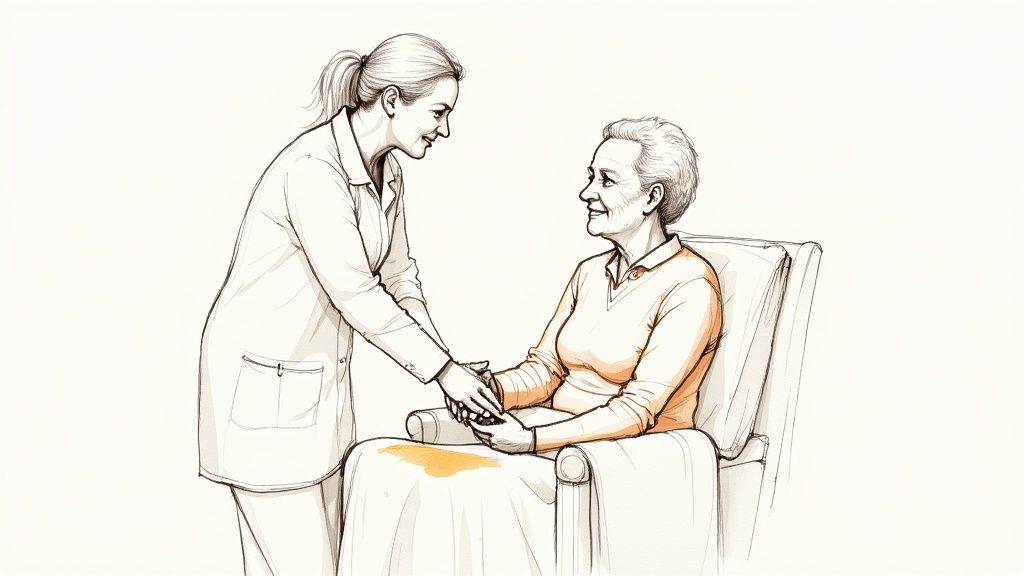
As a Certified Nursing Assistant, you’re on the front lines. Your daily interactions directly shape a resident's quality of life. This isn't just about checking off a list of tasks; it’s about creating a calm, safe, and dignified space for someone who is vulnerable. This responsibility goes far beyond the standard duties listed in a typical CNA job description, demanding a unique mix of heart and strategy.
You're the one who spends the most time with these residents, which makes your role critical. You become their most familiar face and consistent point of contact, putting you in the perfect position to spot subtle shifts in their health or behavior that a nurse or doctor might not see right away.
Building a Foundation of Trust
Trust is the bedrock of everything you do in dementia care. Your residents often feel lost, scared, or confused, and your steady, reassuring presence can be an anchor in their storm. It's the small, consistent things you do that build this crucial bond.
- Approach from the front. Never come up from behind or the side. Let them see you coming, make eye contact, and move slowly to avoid startling them.
- Use a gentle touch. Words can get jumbled, but a comforting hand on their arm or shoulder speaks volumes about your intention to help, not harm.
- Keep a consistent routine. Predictability is calming. When residents know what to expect, it dramatically reduces their anxiety and confusion.
A huge part of your job is truly getting a handle on the changes your residents are going through. Taking the time for understanding cognitive decline will make you a much more effective caregiver.
The real secret is learning to see the world from their perspective. When you meet them where they are, instead of trying to force them into our reality, you can head off so much anxiety and build a real partnership.
In the end, you're their advocate, their caregiver, and a source of comfort. Your goal is to make every day as positive and peaceful as it can possibly be for the people you care for.
Beyond Words: How You Say It Matters Most
When you're caring for someone with dementia, what you say is often less important than how you say it. A warm tone, a gentle touch on the arm, and a calm presence can cut through confusion and anxiety better than any perfectly chosen words. This is where you move beyond just completing tasks and start making a real connection.
Think about the small changes you can make. Instead of putting someone on the spot with a memory question like, "Do you remember me?" just offer a simple, friendly greeting. "Good morning, Mary. I'm so happy to see you today." This simple switch avoids pressure and starts your time together on a positive and reassuring note.
Becoming a Behavior Detective
For many residents with dementia, behavior is their primary form of communication. When someone gets agitated, restless, or withdrawn, they're not trying to be difficult—they're trying to tell you something. Your job is to be a detective and figure out the unmet need behind the action.
What might they be trying to say?
- Pacing back and forth? They might need the bathroom, be hungry, or simply feel bored and need a change of scenery.
- Fussing with their clothes? Maybe they're too warm, their shirt is bunched up uncomfortably, or something is causing them pain.
- Suddenly becoming quiet or withdrawn? They could just be tired, or perhaps the room is too noisy and they feel overwhelmed.
By learning to read these non-verbal cues, you can solve the real problem instead of just reacting to the behavior it causes.
The single most important thing to remember is to validate the emotion, not correct the fact. If a resident is asking for her mother who passed away years ago, arguing with her will only create more distress. Instead, connect with the feeling behind her words. Try saying, "It sounds like you're missing her a lot right now. Can you tell me what she was like?"
This person-centered approach makes all the difference. As a CNA, you are on the front lines, spending an average of 4.1 hours per day with residents who have dementia. The way you communicate directly shapes their day, and an empathetic approach is proven to improve their mood and reduce challenging behaviors. You can dig deeper into the impact of CNA communication strategies to see just how vital your role is.
Navigating Challenging Behaviors with Empathy
When you're working with residents who have dementia, you'll inevitably encounter behaviors like agitation, wandering, or sundowning. It's easy to feel overwhelmed, but the most important shift you can make is in your perspective.
These aren't just "problem behaviors." They are a form of communication. Your resident is trying to tell you something they can't put into words. Your job is to become a detective. Is the room too noisy? Are they in pain? Are they feeling lonely, scared, or bored?
Thinking this way changes everything. You stop simply reacting to a situation and start proactively looking for the root cause. It’s the difference between trying to control someone and trying to help them with compassion.
This infographic lays out just how much your approach matters.
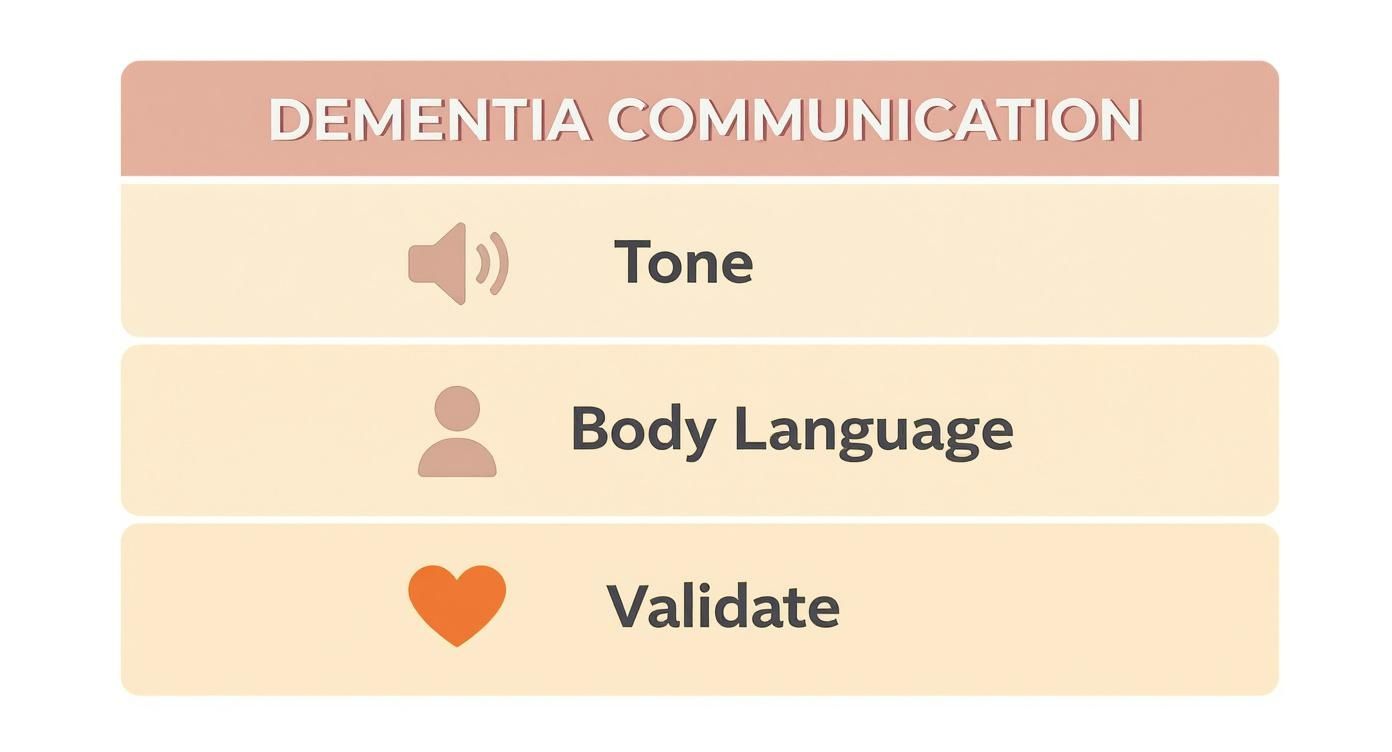
As it shows, your most powerful tools aren't restraints or medication—they're your tone of voice, your body language, and your willingness to validate what the resident is feeling.
Strategies for Common Scenarios
Let's break down some common situations and how to handle them in a way that preserves dignity and reduces stress for everyone.
- For Sundowning: That late-afternoon increase in confusion and restlessness is a classic sign of sundowning. Instead of waiting for it to start, get ahead of it. About an hour before dusk, begin to create a calmer atmosphere. Dim the lights, switch off the blaring TV, and put on some soft, familiar music. A gentle transition into the evening can make a world of difference.
- For Wandering: A resident who wanders isn't usually trying to escape; they're often searching for something or someone familiar, or they may just feel a physical need to move. Don't block them. Instead, make sure their environment is safe with clear, circular paths. Then, try to redirect them gently. You could say, "Mr. Smith, would you help me fold these towels?" or invite them to sit and look through an old photo album with you.
- For Agitation: The first step is always to rule out physical causes. Do they need to use the restroom? Are they in pain? If those needs are met, a simple and calm distraction can work wonders. Offer a favorite snack, bring up a fond memory you know they enjoy talking about, or sometimes, just sitting with them in silence for a few minutes is all it takes.
Your goal is not to stop the behavior but to understand and address the emotion or need driving it. By joining their reality and offering comfort, you build trust and de-escalate the situation without confrontation.
Compassionate Responses to Common Behaviors
Here's how you can decode common behaviors and respond in a supportive, person-centered way:
Pacing or Wandering
- Potential Causes: Boredom, pain, looking for the bathroom, restlessness, searching for something familiar.
- Your Response: Create a safe walking path. Gently ask, "Where are we going today?" or offer a simple activity. Check for their physical needs.
Repetitive Questions
- Potential Causes: Anxiety, memory loss, seeking reassurance, feeling insecure or lost.
- Your Response: Answer calmly and patiently, even if it's the 10th time. You can also write the answer down or redirect to a calming activity.
Agitation or Aggression
- Potential Causes: Pain, fear, feeling overwhelmed (too much noise/activity), being asked to do something they can't.
- Your Response: Stay calm and lower your voice. Rule out pain first. Simplify the environment. Give them space and then try re-approaching in a few minutes.
Sundowning
- Potential Causes: End-of-day fatigue, changes in light, shift changes, disruption to their internal clock.
- Your Response: Reduce stimulation in the late afternoon. Close the blinds, play soft music, and offer a simple, calming activity or a light snack.
Remember, every behavior is a clue. By responding with empathy and curiosity, you can turn a moment of distress into one of connection and reassurance.
Making Daily Activities Dignified and Calm
Activities of Daily Living, or ADLs, can quickly become the biggest challenge of your shift when caring for residents with dementia. Simple things like getting dressed, eating a meal, or taking a bath can feel like a battle if you don't approach them with the right mindset.
The trick is to reframe these tasks. Instead of just another item on your to-do list, see them as a chance to connect and create a moment of calm. Your patience is your most powerful tool here. Break every action down into tiny, manageable steps. Rather than saying, "Okay, let's get you dressed," which can feel overwhelming, try a single, gentle instruction like, "Let's put your arm in this sleeve."
Practical Tips for Smoother Routines
Your goal is to make things easier, reduce their confusion, and give them back a little bit of control.
- Dressing: Try laying out their clothes in the exact order they need to go on. This simple visual guide can make a huge difference, helping the resident participate instead of feeling like they’re just being dressed by someone else.
- Meals: Vision changes can make it hard for some residents to see the food on their plate. Using a high-contrast plate—a red one often works wonders—can help the food stand out, making it easier for them to eat independently.
- Bathing: This is an incredibly vulnerable time for anyone. Make sure the bathroom is warm and comfortable before they even enter. As you help them, explain every single thing you're about to do before you do it, using a calm, reassuring voice. For more in-depth techniques, our guide on perineal care for CNAs has some great advice.
The real secret is building a predictable routine and never, ever rushing. When a resident feels they have plenty of time, they are far more likely to cooperate. This makes the entire process less stressful for both of you and keeps the focus on what they can do, not what they can't.
This dignified approach is especially vital given the challenges within the dementia care workforce. CNAs are the largest segment of direct caregivers, with over 2.4 million in the U.S. alone. However, high turnover often leads to inconsistent care, which is why your well-trained, patient-centered approach is so critical for resident well-being. You can find more details on the importance of the CNA workforce in dementia care and its impact.
Creating a Safe and Soothing Environment
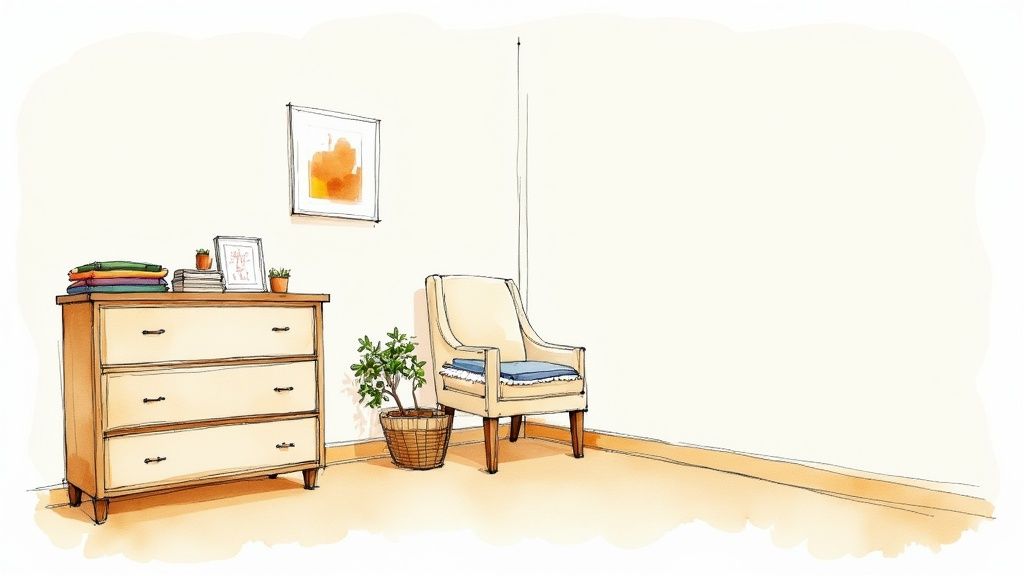
As a CNA, your role goes beyond just direct care tasks; you're often the one shaping the patient's immediate world. A thoughtfully organized environment can be one of your most effective tools. A calm, predictable space doesn't just reduce a patient's anxiety—it can make your entire shift run more smoothly by preventing confusion and agitation before it even starts.
Think about the physical risks first. It's a sobering fact that up to 45% of older adults hospitalized after a fall have some level of cognitive impairment. Simple changes to their living space can make a world of difference, giving them more confidence to move around on their own.
Reducing Hazards and Aiding Independence
You don’t need to completely remodel a room to make it safer. It's the small, consistent adjustments that really count.
- Clear the pathways. Get rid of throw rugs (they’re a huge trip hazard), unnecessary furniture, and any stray electrical cords. A clear path from the bed to the bathroom is non-negotiable.
- Boost the lighting. Bright, even lighting is key. Shadows can look like frightening holes or obstacles to someone with dementia. Plug in nightlights along hallways and in the bathroom to make those nighttime trips safer.
- Add simple visual cues. Labeling is your friend. A picture of a toilet on the bathroom door or a simple label that says "Socks" on a drawer can short-circuit a lot of frustration and help maintain a sense of independence.
These aren't just safety measures; they are powerful ways to empower your resident.
Your environment is like a silent partner in care. When words don't work, a familiar, well-organized room can communicate safety and calm, heading off agitation before it has a chance to build.
Creating a Soothing Sensory Experience
Now, think about the feel of the room. What do you hear and see? A blaring TV, constant overhead paging, or competing conversations can be incredibly overwhelming for someone with dementia.
Do what you can to lower the noise level. Turn off the TV if no one is actively watching it. Sometimes, just introducing a soft blanket, placing a few cherished photos nearby, or playing some quiet music from their youth can work wonders. These simple comforts transform a clinical space into a personal sanctuary, helping your patient feel grounded and secure.
Why Your Self-Care Is Non-Negotiable
There’s a reason for the old saying, "You can't pour from an empty cup." As a CNA caring for individuals with dementia, your work is incredibly demanding, both physically and emotionally.
Prioritizing yourself isn’t selfish—it's a professional requirement. Your well-being is directly tied to the quality of care you can give. When you're running on fumes, it’s almost impossible to provide the patient, compassionate care your residents need.
Ignoring your own needs is a fast track to burnout. The stress of this job is real, and it’s crucial to catch the early signs before they take over. If you’re feeling constantly exhausted, unusually irritable, or just emotionally numb, your body is sending you a signal. It's telling you it's time to recharge. For a deeper look, check out our guide on the symptoms of CNA burnout.
Simple Strategies for On-the-Job Resilience
You don't need a full-blown spa day to practice self-care. Small, intentional moments during your shift can make a world of difference.
-
Take a Mindful Moment. Before you walk into a resident's room, pause. Take three slow, deep breaths. It’s a simple trick, but it works. It can help reset your mind and allow you to enter the room feeling calmer and more centered.
-
Lean on Your Team. Had a really tough interaction? Find a coworker you trust and talk it out for a few minutes. Just sharing what happened can take a massive weight off your shoulders.
Taking care of yourself is the most important part of your job. It ensures you can continue to provide the empathetic, high-quality care that your patients deserve day after day.
There's a reason federal regulations mandate ongoing dementia care education for CNAs: a skilled, well-supported approach leads to better outcomes for residents. You can only bring those person-centered strategies to life when you're not completely drained.
Learning more about how respite care actively prevents caregiver burnout can also provide some valuable perspective on the importance of taking breaks.
Answering Your Toughest Questions
Working as a CNA with dementia patients means you’re going to run into some tricky situations. There's no one-size-fits-all answer, but having a few solid strategies in your back pocket can make all the difference. Let's tackle a couple of the most common questions I hear from fellow CNAs.
What if My Patient Refuses Care?
First things first: never force it. When a patient says "no" to a bath or refuses to get dressed, they aren't just being difficult. That refusal is communication. They might be in pain, scared, confused, or simply trying to have a little control over their own life.
The best move is to take a step back and acknowledge what they're feeling. Something simple like, "I can see you don't want a shower right now, and that's okay," can work wonders.
Give it about 10-15 minutes and then try a new approach. Maybe ask a different caregiver to try, or change how you phrase the request. Your goal is to build trust, and sometimes that means letting go of the schedule to honor their wishes.
How Do I Handle a Patient's False Beliefs?
This one is tough, but the golden rule is to enter their world, don't try to pull them back into ours. Arguing or correcting them only leads to more confusion and agitation. This approach is often called validation therapy, and it’s all about connection over correction.
Let's say a resident is waiting for her mother to pick her up. Instead of telling her that her mother passed away years ago, lean into the emotion. You could say, "You must love your mother very much. Tell me about her while we wait."
By validating the feeling behind the belief, you show them you're on their side. You turn a potentially stressful moment into a chance to connect and reminisce, reinforcing that you're a source of comfort, not conflict.
At The CNA Guide, we provide free, state-by-state resources to help you launch and advance your career with confidence. Find training programs, licensing guides, and job opportunities at https://thecnaguide.com.