Becoming a Certified Nursing Assistant (CNA) is a rewarding first step into healthcare, but the cost of training can be a significant hurdle. The good news? You don't have to let tuition fees stop you. A wide range of financial aid and scholarships for CNAs exists specifically to help aspiring caregivers like you get certified without breaking the bank. From federal grants and state-funded programs to employer-sponsored training, countless opportunities can cover your tuition, fees, and even testing costs.
This guide is designed to be your one-stop resource for finding and securing that funding. We will explore the different types of financial support available, from broad federal aid to highly specific state-level and private scholarships. To begin your journey toward a debt-free CNA career, it's helpful to gain a comprehensive overview of funding opportunities, including grants and scholarships.
We've curated a list of 12 of the best websites and platforms to jumpstart your search. For each resource, we’ll provide a clear breakdown, direct links, and practical tips on how to apply, so you can focus less on searching and more on starting your new career.
Understanding Financial Aid and Scholarships for CNAs
Financial aid for CNA training comes in many forms, available at both the national (federal) and state levels. Understanding these types is the first step to securing funding.
Types of Aid Available
- Grants: These are funds you do not have to repay. Federal Pell Grants are the most common, awarded based on financial need. Many states also offer grants for students pursuing in-demand careers like healthcare.
- Scholarships: Like grants, scholarships are free money for your education. They are typically merit-based (awarded for academic or personal achievements) or need-based. Scholarships can come from colleges, private organizations, or community groups.
- Workforce Development Programs: Federal programs like the Workforce Innovation and Opportunity Act (WIOA) provide funding through local American Job Centers to cover training costs for high-demand jobs.
- Employer-Sponsored Training & Reimbursement: Many healthcare facilities, especially nursing homes, will pay for your CNA training upfront or reimburse your tuition costs after you are hired and work for a specific period.
- Apprenticeships: These "earn while you learn" programs pay you a wage while you receive on-the-job training and classroom instruction, with your employer covering all education costs.
General Criteria and How to Apply
- Criteria: Eligibility varies widely. Grants like the Pell Grant are based on financial need determined by the FAFSA. Scholarships may require a minimum GPA, an essay, or residency in a specific state. Workforce programs often have income or employment status requirements.
- How to Apply:
- Start with the FAFSA: The Free Application for Federal Student Aid (FAFSA®) is the key to unlocking federal and many state grants. Complete it at https://studentaid.gov.
- Contact Your School: The financial aid office of your chosen CNA program is a crucial resource. They can connect you with institutional scholarships and state-specific aid.
- Search Scholarship Databases: Use online search tools to find private scholarships.
- Visit American Job Centers: For WIOA funding, you must apply through your local American Job Center.
- Inquire with Employers: Contact local nursing homes and hospitals directly to ask about tuition assistance or free training programs.
1. Federal Student Aid (studentaid.gov)
Your absolute first stop for securing financial aid for CNA training should be the official U.S. Department of Education website. This is where you will complete the Free Application for Federal Student Aid (FAFSA®), the single most important application for unlocking need-based grants, loans, and work-study programs. It is the primary gateway for any federal financial assistance, making it a critical step for aspiring CNAs.
The information you provide on the FAFSA determines your eligibility for the Federal Pell Grant, which is free money you don't have to repay. Many community colleges and technical schools with Title IV-accredited CNA programs use your FAFSA results to create a comprehensive aid package. This centralized process simplifies applications, as the government sends your data directly to the schools you select.
How to Use It Effectively
- Check Eligibility First: Before starting, confirm your chosen CNA program is at a "Title IV institution." Not all short-term or private training programs qualify for federal aid.
- Gather Documents: Have your Social Security number, federal income tax returns, W-2s, and bank statements ready before you begin the FAFSA.
- Apply Annually: The FAFSA must be completed each year you plan to attend school, so make a note of the deadlines.
Website: https://studentaid.gov
2. CareerOneStop Scholarship Finder (U.S. Dept. of Labor)
Sponsored by the U.S. Department of Labor, CareerOneStop is a trustworthy and comprehensive scholarship search tool. Unlike commercial sites, it is completely free of ads and focused solely on connecting users with legitimate financial aid opportunities. For those looking for financial aid and scholarships for CNAs, this platform consolidates over 8,000 vetted scholarships, grants, and fellowships into a single, searchable database. It is an excellent resource for uncovering both national and local awards that you might not find elsewhere.
The platform’s power lies in its detailed search filters, allowing you to narrow down results by award type, location, level of study, and specific keywords like "CNA" or "nursing assistant." This precision helps you sift through thousands of listings to find relevant funding for various CNA programs. Each listing provides a summary, deadline, award amount, and a direct link to the application page, simplifying your research process significantly.
How to Use It Effectively
- Use Specific Keywords: Start with broad terms like "CNA" and then narrow your search with more specific phrases like "geriatric care scholarship" or your state's name.
- Sort by Deadline: Organize search results by application deadline to prioritize scholarships that are closing soon and create a manageable application timeline.
- Explore Related Fields: Don’t limit your search to just "CNA." Look for scholarships related to healthcare, nursing, and community service, as many of these are open to aspiring CNAs.
Website: https://www.careeronestop.org/Toolkit/Training/find-scholarships.aspx
3. WIOA Eligible Training Program Finder + American Job Centers (ETPL / AJCs)
The Workforce Innovation and Opportunity Act (WIOA) is a federal program that offers funding for job training, and it's a fantastic resource for aspiring CNAs. The CareerOneStop website, sponsored by the U.S. Department of Labor, hosts an Eligible Training Provider List (ETPL) search tool. This allows you to find state-approved CNA programs that are eligible for WIOA funding, which often covers the full cost of tuition, books, and supplies.
This platform connects you with local American Job Centers (AJCs), where counselors guide you through the eligibility screening and application process. If approved, you receive a training voucher that pays the school directly. This system is especially beneficial because it targets short-term, career-focused training programs that might not qualify for traditional federal student aid, making it a key part of financial aid and scholarships for CNAs.
How to Use It Effectively
- Find Local Programs First: Use the ETPL search tool on CareerOneStop to identify WIOA-approved CNA programs in your area.
- Contact Your Local AJC: Once you find a program, contact your nearest American Job Center to start the eligibility and application process. Be prepared with income and employment documentation.
- Do Not Enroll Yet: You must be approved for WIOA funding before enrolling in your chosen CNA program, as the voucher is not retroactive.
Website: https://www.careeronestop.org/LocalHelp/EmploymentAndTraining/find-WIOA-training-programs.aspx
4. Apprenticeship.gov – Apprenticeship Job Finder
An excellent alternative to traditional financial aid is an apprenticeship, which allows you to earn a wage while you learn. The U.S. Department of Labor's official job finder is the national portal for locating registered apprenticeships, including many for aspiring Certified Nursing Assistants. These programs offer paid, on-the-job training and related classroom instruction, often with the sponsoring employer covering tuition costs entirely. This "earn while you learn" model provides a direct pathway to employment without student debt.
This platform is a powerful tool for finding financial aid and scholarships for CNAs because the support is built directly into the job. Instead of applying for separate grants, you apply for a paid position that includes your education. Upon completion, you not only have your CNA certification but also a guaranteed job and a nationally recognized credential from the Department of Labor, which can boost your career prospects significantly.
How to Use It Effectively
- Use Broad Keywords: Search for terms like "Nursing Assistant," "Patient Care," and "Healthcare" in addition to "CNA" to find all relevant opportunities.
- Search by Location: The availability of apprenticeships is highly regional. Use the ZIP code and radius search to find programs near you.
- Contact Sponsors Directly: Listings provide contact information for the employer or sponsor. Reaching out directly can show initiative and help you learn more about the program requirements.
Website: https://www.apprenticeship.gov/apprenticeship-job-finder
5. AAPACN Education Foundation (aapacn.org)
For Certified Nursing Assistants already working in the field and looking to advance their careers, the American Association of Post-Acute Care Nursing (AAPACN) Education Foundation is an invaluable resource. This organization specifically targets CNAs in post-acute and long-term care settings who are pursuing higher education, such as becoming a Registered Nurse (RN). It provides targeted scholarships designed to reward and support dedicated caregivers on their path to career growth.
Unlike resources for initial CNA training, the AAPACN Foundation focuses on the next step. Its scholarships, like the "Frontline Heroes in Post-Acute Care" award, are created to bridge the gap from CNA to RN or BSN. This makes it one of the few national programs providing financial aid and scholarships for CNAs dedicated to furthering their nursing education, offering both financial support and professional recognition for their commitment.
How to Use It Effectively
- Plan Ahead: These scholarships are competitive and have fixed annual deadlines. Start preparing your application, including securing employer recommendations, well in advance.
- Highlight Your Experience: Emphasize your work in post-acute care (e.g., nursing homes, assisted living) in your application essays, as this is a key focus for the foundation.
- Check Eligibility Carefully: Confirm you meet all requirements, such as U.S. residency and current employment as a CNA, before applying.
Website: https://www.aapacn.org/foundation/
6. College Board BigFuture Scholarship Search
The College Board, known for the SAT and AP programs, also runs a powerful scholarship search engine called BigFuture. This is a highly credible and well-maintained resource for finding niche awards that other large databases might miss. It is particularly useful for CNA students because its filters allow you to search specifically for scholarships applicable to certificate programs and vocational training, not just four-year degrees.
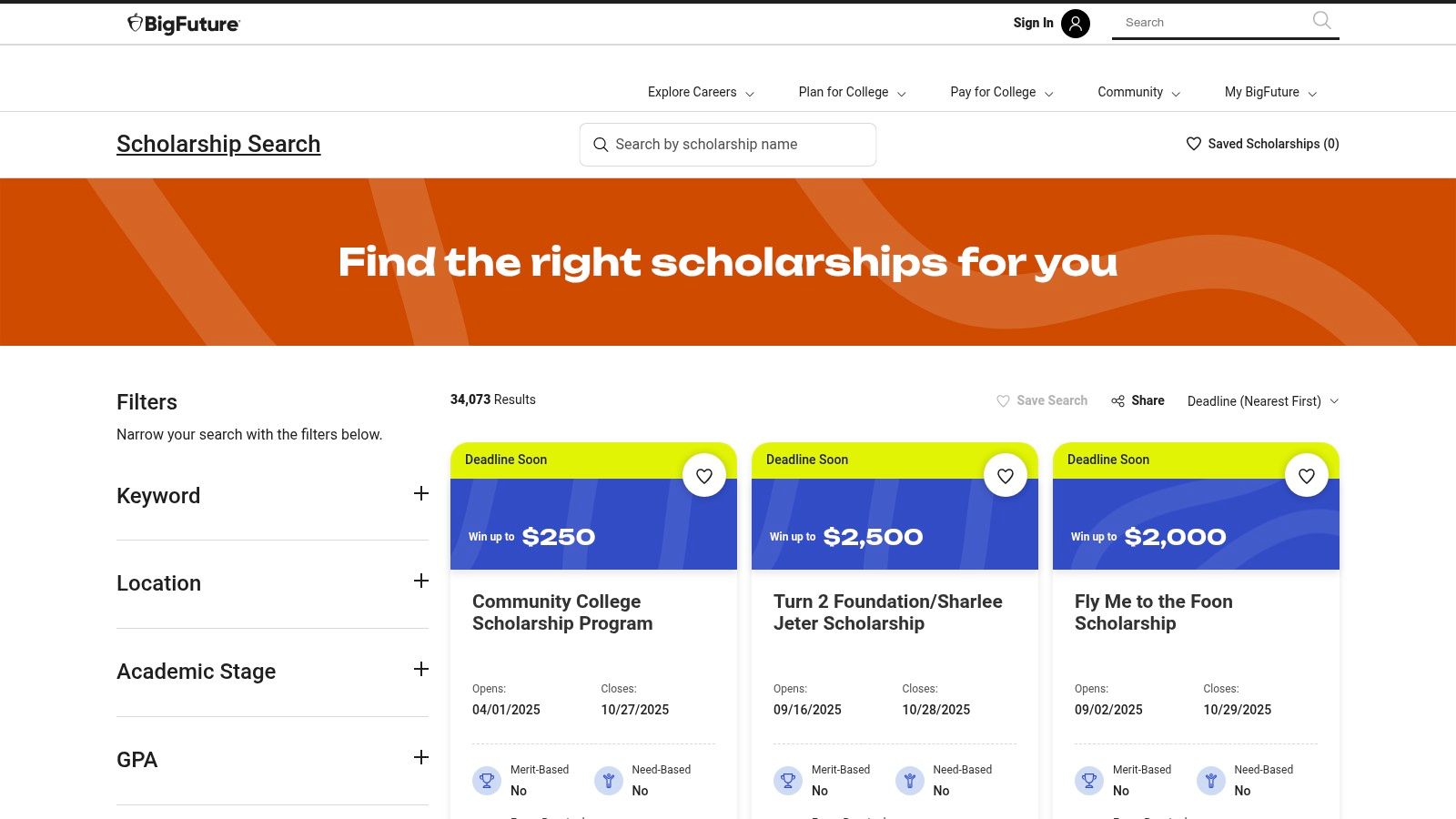
This platform stands out by listing smaller institutional, regional, and even program-specific awards, such as the Rosetta Green CNA scholarship. The detailed listings provide clear eligibility requirements, award amounts, and direct links to the application, streamlining your search for financial aid and scholarships for CNAs. Creating a free account allows you to save your findings and track deadlines effectively.
How to Use It Effectively
- Filter for Your Program: Use the filters for "major" (e.g., nursing assistant) and "type of award" (e.g., vocational/trade school) to narrow down the massive list.
- Look for Local Awards: Pay close attention to scholarships limited to your state or county, as these often have a smaller, less competitive applicant pool.
- Create a Profile: Answering the profile questions will help the platform automatically match you with scholarships you qualify for, saving you significant time.
Website: https://bigfuture.collegeboard.org/scholarship-search
7. Fastweb
As one of the oldest and most trusted scholarship search engines, Fastweb is a must-use resource for anyone seeking private funding for their education. After creating a detailed profile, the platform matches you with national and local awards, including specific scholarships for CNAs and related healthcare fields. This personalized approach saves you significant time by filtering its massive database to find relevant opportunities.

Fastweb stands out by aggregating both large national scholarships and smaller, localized awards from community foundations and professional associations that you might otherwise miss. Its system sends you email alerts when new scholarships matching your profile are added, ensuring you don't miss application deadlines. This makes it a powerful tool for finding niche financial aid and scholarships for CNAs that aren’t available through federal programs.
How to Use It Effectively
- Be Detailed: The more information you provide in your profile (academics, interests, location), the more accurate your scholarship matches will be.
- Check Regularly: Log in periodically to update your profile and check for new matches, as the database is constantly updated.
- Organize Applications: Use Fastweb to discover opportunities, but keep a separate calendar or spreadsheet to track the deadlines and requirements for each external application.
Website: https://www.fastweb.com
8. Washington State DSHS – Nursing Assistant Certified (NAC) Reimbursement Program
While not a traditional scholarship fund, this resource is a powerful example of an alternative funding route: employer reimbursement. The Washington State Department of Social and Health Services (DSHS) outlines a program rooted in federal law that requires Medicaid-contracted nursing facilities to reimburse new hires for their CNA training and testing costs. This model offers a blueprint for how aspiring CNAs can get their education paid for after securing a job.
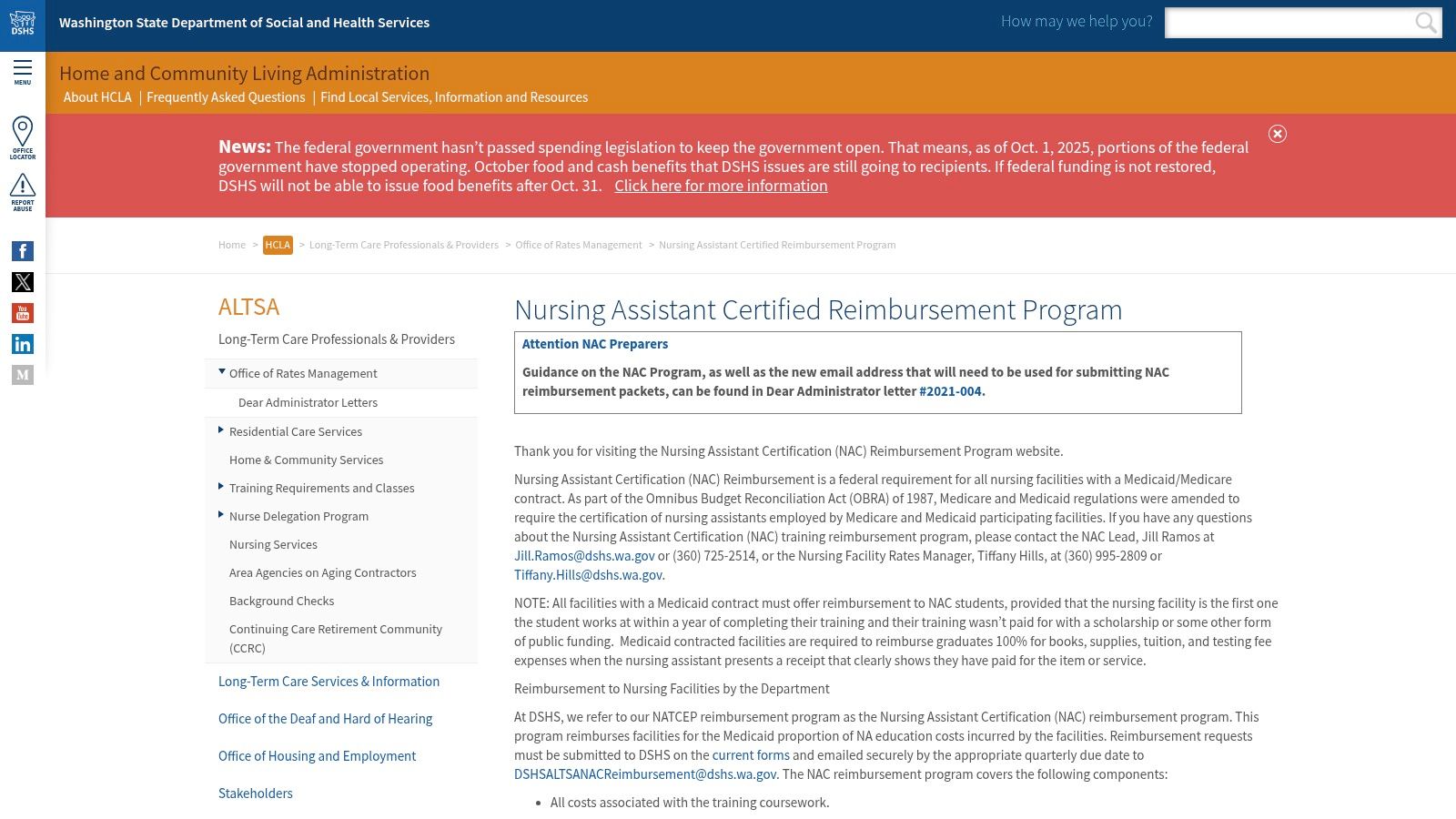
The site provides the specific forms, instructions, and legal references (like federal regulation 42 CFR 483.152) that empower CNAs to advocate for themselves. It details the process for a nursing facility to claim reimbursement after they have paid the employee back for tuition, books, and fees. This resource is essential for any CNA student who plans to work in a long-term care facility, as similar rules often apply in other states.
How to Use It Effectively
- Understand Your Rights: Even if you are not in Washington, use this site to understand the federal "no-charge and reimbursement" rules that may apply in your state.
- Prepare for Job Interviews: Bring up this reimbursement possibility during interviews with nursing homes to show you are informed and to confirm their policy.
- Document Everything: Keep all receipts for tuition, books, supplies, and testing fees to submit for reimbursement once you are hired.
9. WisCaregiver Careers (wiscaregivercna.com)
For Wisconsin residents, WisCaregiver Careers offers a unique and powerful alternative to traditional financial aid and scholarships for CNAs. This state-backed program provides a zero-tuition pathway into the profession by connecting aspiring CNAs with employers who sponsor their training. Trainees are paid for their time, effectively earning a wage while learning, and all costs for training, books, and certification exams are covered.
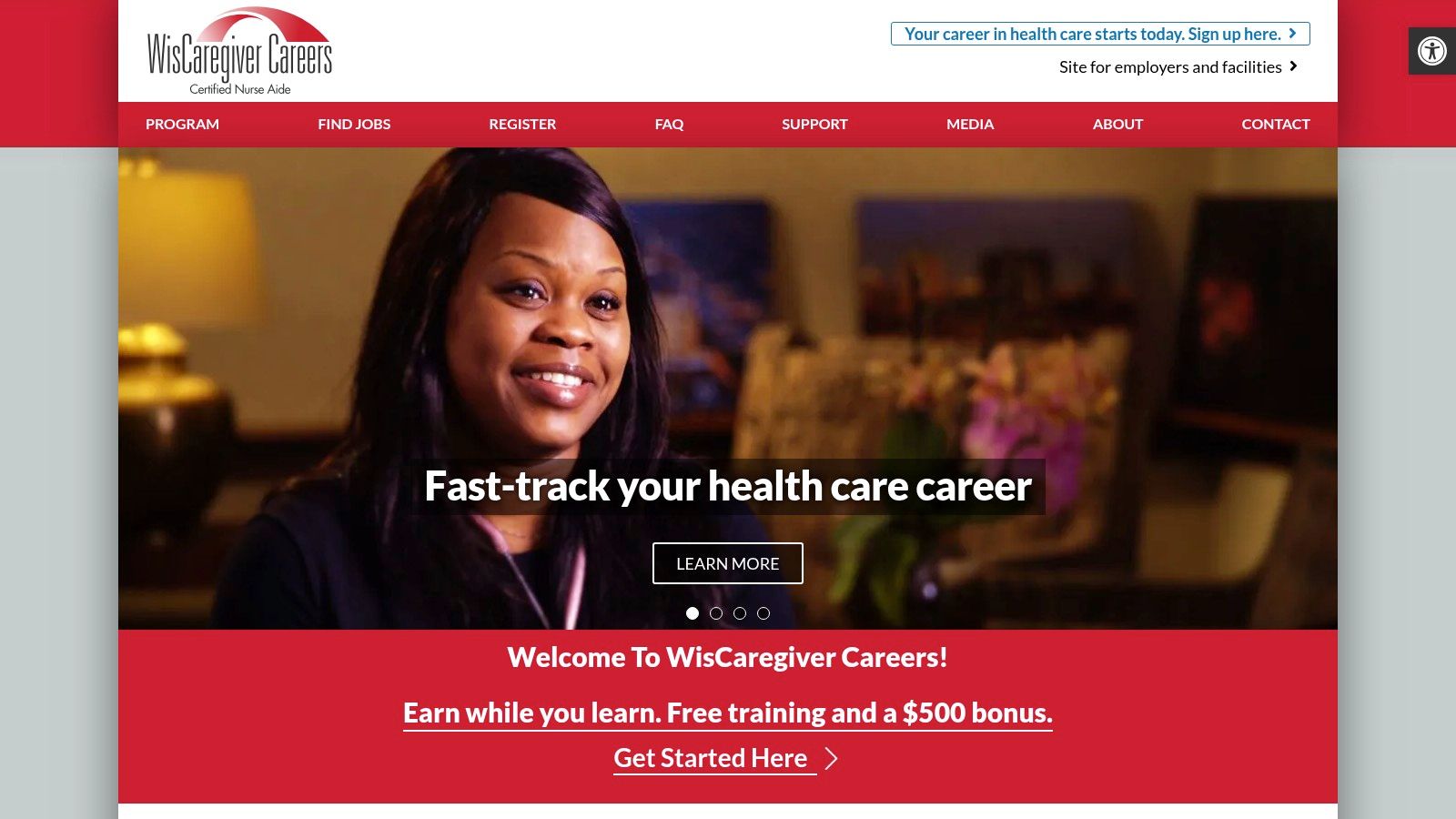
The program's standout feature is its direct job placement model, which eliminates the stress of both funding training and finding a job afterward. Upon completion, participants receive a $500 retention bonus after working for six months with their sponsoring long-term care facility. This state-level initiative is an excellent example of a workforce development program that directly addresses the high cost of entry-level healthcare education and local staffing needs.
How to Use It Effectively
- Check Your Location: Confirm you live in Wisconsin and that participating employers are available in your immediate area.
- Register Online: Use the central portal to register your interest and be matched with local training centers and employers.
- Prepare for Employment: Understand that this is a work-and-learn program, so be ready to commit to a job with the sponsoring facility upon certification.
Website: https://wiscaregivercna.com
10. Center for Caregiver Advancement (advancecaregivers.org)
For aspiring CNAs in California, the Center for Caregiver Advancement offers a unique "earn while you learn" model that goes far beyond typical scholarships. This organization provides grant-funded registered apprenticeships, partnering with employers to combine paid, on-the-job training with classroom instruction. It is an all-in-one solution that eliminates the financial barriers many students face when pursuing CNA certification.
This program covers all tuition and training costs, but its standout feature is the comprehensive wraparound support. Participants receive wages for their work, stipends for childcare and transportation, mentoring, and retention bonuses. This holistic approach to financial aid and scholarships for CNAs ensures students can focus on their training without worrying about living expenses, making it an incredibly effective pathway to a stable healthcare career. The program also establishes a clear advancement ladder from CNA to LVN.
How to Use It Effectively
- Check Program Availability: The apprenticeship programs are only available in specific regions of California and through partner employers. Check the website frequently for new openings.
- Prepare for the Application Process: Be ready to demonstrate your commitment to a career in caregiving and to the employer partner you will be working with.
- Understand the Commitment: These are registered apprenticeships, which often require a commitment to work for the partner employer for a certain period after certification.
Website: https://advancecaregivers.org/cnarap/
11. Sitrin Health Care Center – Fully Funded CNA Scholarships (sitrin.com)
Provider-funded scholarships are a fantastic way to secure financial aid and scholarships for CNAs while guaranteeing employment. Sitrin Health Care Center in Central New York offers a prime example of this model, periodically providing scholarships that cover 100% of the costs for the Madison-Oneida BOCES Nurse Aide Training program. This includes tuition, books, uniforms, and even exam fees, removing all financial barriers for accepted candidates.
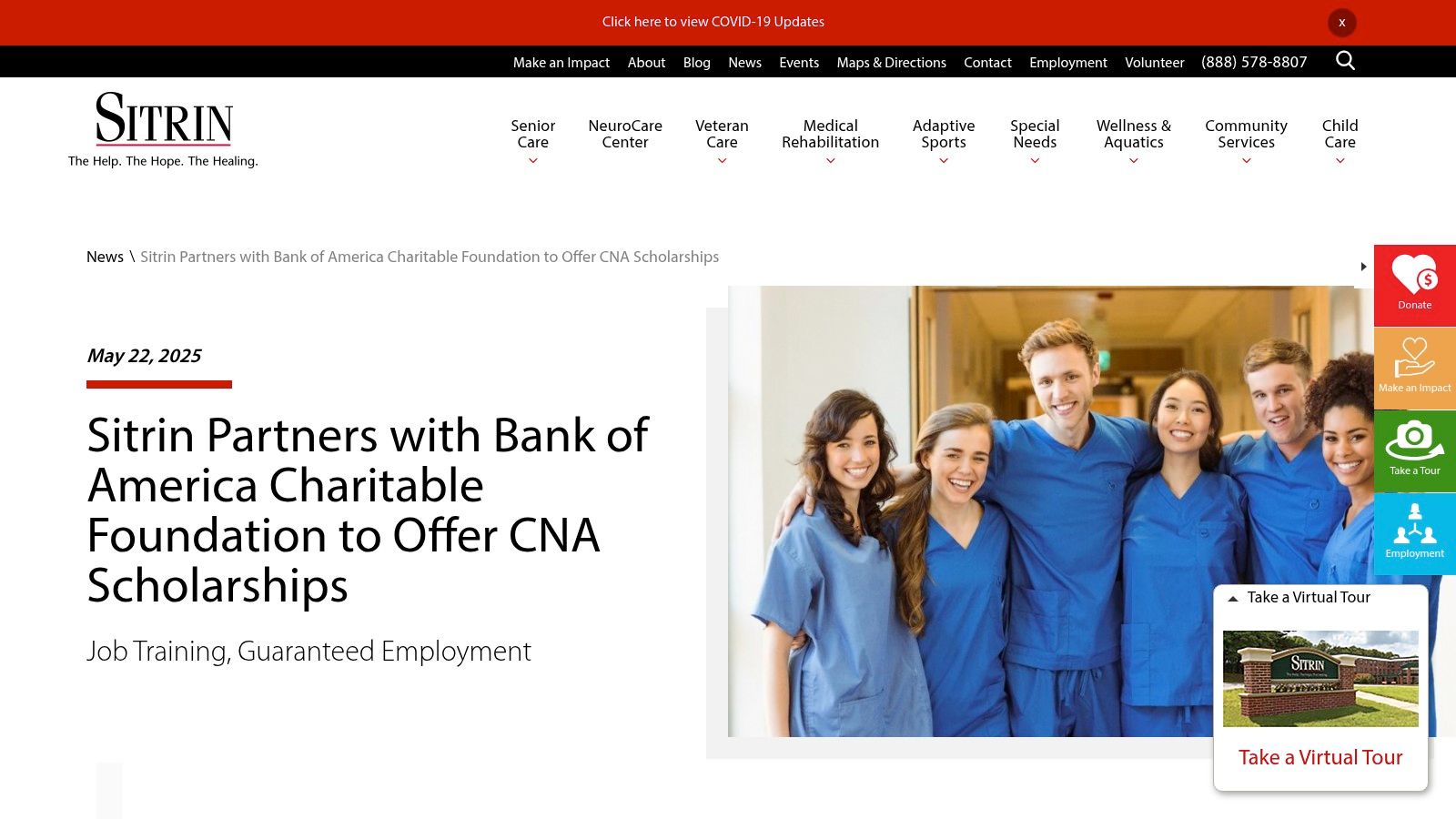
In exchange for this comprehensive funding, recipients agree to a two-year employment commitment with Sitrin upon successful program completion and certification. This unique arrangement provides a direct pathway from education to a stable career, eliminating the stress of a post-graduation job search. Once your training is complete, the next step is presenting your new skills, and a guide on creating an outstanding CNA resume can help you prepare for future career growth.
How to Use It Effectively
- Monitor Announcements: Since these scholarships are offered in cycles, regularly check the Sitrin news page or contact their human resources department for application windows.
- Prepare for an Interview: The application process will likely include an interview to assess your commitment to both the program and the subsequent employment term.
- Confirm Program Details: Ensure you can meet the requirements of both the Madison-Oneida BOCES program and the two-year work agreement before applying.
Website: https://www.sitrin.com/news/sitrin-cna-scholarships-2025/
12. The CNA Guide (thecnaguide.com)
Rounding out our list, The CNA Guide serves as a comprehensive hub that connects aspiring and current CNAs with essential resources, including leads on financial aid. While not a direct funding source, its state-by-state directory of training programs is an invaluable tool for your search. Many of the program listings include information about financial aid options, payment plans, or affiliations with WIOA and other state-level funding initiatives.
By using the guide to compare local CNA programs, you can identify schools that are more likely to offer financial assistance. This research is a critical step before you even start applying for scholarships, as it helps you target programs that are already set up to support students financially. The site helps you find schools, and then you can inquire directly with them about their specific scholarships and aid packages.
How to Use It Effectively
- Research Local Programs: Use the state directory to create a shortlist of approved CNA training programs in your area.
- Visit Program Websites: Click through to the websites of the schools you've shortlisted and look for a "Financial Aid" or "Tuition Assistance" page.
- Contact Admissions Directly: Call the admissions office of each program and ask specifically what types of financial aid and scholarships for CNAs they offer or accept.
Website: https://thecnaguide.com
Putting It All Together: Your CNA Funding Strategy
Embarking on a career as a Certified Nursing Assistant is a commendable goal, and securing the necessary funding is your first major step toward achieving it. As we've detailed, the landscape of financial aid and scholarships for CNAs is vast and varied, offering pathways for nearly every aspiring caregiver. You don't have to navigate this journey with student loans as your only option.
The most effective strategy is a proactive, multi-layered one. Begin with the foundational step of completing the FAFSA to unlock federal aid like Pell Grants. This single application opens the door to numerous opportunities and is a crucial starting point for most financial aid journeys.
Building Your Funding Plan
After tackling the FAFSA, your search should branch out. Here’s a quick recap of the most impactful tools and a strategy to make them work for you:
- Federal and State-Level Tools: Start broad. Use Federal Student Aid (studentaid.gov) as your base. Then, dive into state-specific resources by exploring the WIOA Eligible Training Program Finder to connect with an American Job Center. These government-backed programs are specifically designed to fund training for in-demand jobs, and CNA certification is almost always on that list.
- National Scholarship Databases: Cast a wide net using tools like CareerOneStop and Fastweb. The key here is persistence. Set up alerts and check back regularly, as new scholarships are added all the time. Be prepared to write short essays and gather recommendation letters.
- Hyper-Local and Employer-Specific Opportunities: This is where you can find some of the best, most direct funding. Don't underestimate programs like Washington State's DSHS NAC Reimbursement or employer-specific scholarships from places like Sitrin Health Care Center. These often cover the full cost of training in exchange for a work commitment, providing you with a debt-free education and a guaranteed job.
Your Actionable Next Steps
Feeling overwhelmed? Don't be. Break the process down into manageable tasks. Create a simple spreadsheet to track the scholarships you find, noting their deadlines, requirements, and application status. Tailor your application materials for each opportunity, highlighting your passion for caregiving and your commitment to the profession.
Remember, the best tool for you depends on your unique situation. If you are unemployed or underemployed, WIOA is likely your strongest starting point. If you already know which facility you want to work for, inquire directly about their tuition assistance programs. By combining federal aid, state grants, and private scholarships, you can piece together a comprehensive funding package that minimizes or even eliminates out-of-pocket costs.
Your path to becoming a CNA is an investment in a future filled with purpose. With the right resources and a determined approach, you can overcome any financial hurdles and focus on what truly matters: preparing to provide compassionate, skilled care to those who need it most.
Ready to find a CNA program that aligns with your financial aid plan? The CNA Guide offers a comprehensive, state-by-state directory of training programs to help you find the perfect fit. Visit The CNA Guide to start your search and take the next step in your healthcare career today.