So, you’re thinking about becoming a Certified Nursing Assistant and probably wondering, “How long is this actually going to take?” It’s the first question on most people’s minds.
The short answer is you can get certified in anywhere from 4 to 16 weeks. This quick turnaround is exactly why becoming a CNA is one of the best entry-level healthcare jobs out there. You can get into the field and start making a difference fast.
But that 4 to 16-week window is pretty wide. The exact timeline really boils down to where you get your training and how the program is structured. A community college might pace the course over a full semester, while a private school or hospital might offer a more intense, fast-tracked option.
Your CNA Training Timeline at a Glance
Let’s break down what those timelines typically look like depending on the type of institution you choose. Think of it this way: some paths are a steady walk, others are a sprint.
As you can see, the environment shapes the schedule. Hospital-based programs are often the quickest route because they’re focused on getting qualified CNAs onto the floor. In fact, some of these “in-house” programs can wrap up in just a few weeks if they have an urgent need to hire.
Typical CNA Program Timelines at a Glance
To make it even clearer, here’s a simple table comparing the common program types.
| Program Type | Average Duration | Best For |
|---|---|---|
| Community College | 16 weeks | Students who prefer a traditional semester pace and college credit. |
| Private Vocational School | 12 weeks | Individuals wanting a balanced, comprehensive program. |
| Hospital-Based Training | 8 weeks | Those looking for the fastest path to employment, often with a job waiting. |
This variety is great because it means you can find a program that fits your life. Whether you need a slower pace to juggle other commitments or you’re ready to dive in headfirst, there’s a path to becoming a CNA that will work for you.
How State Regulations Shape Your Training Hours
If you’re asking why one CNA program takes a month while another takes four, the answer is surprisingly simple: it all comes down to where you live. While the federal government sets a baseline, each state has the final say on what it takes to get certified.
Think of it like this: the federal government created the floor, but each state builds the rest of the house. Federal law mandates that every state-approved CNA program must provide at least 75 hours of total training. This ensures that every CNA, no matter where they are, starts with a common foundation of skills.
But that 75-hour rule is just the starting point. Most states look at that number and decide to add more, beefing up the requirements to meet their own healthcare standards. This is exactly why you see such a huge difference in program lengths from one state to the next.
Why Your State’s Rules Matter Most
One state might decide that 75 hours is plenty, while the state right next door could demand well over 100 hours. This single factor directly impacts how long CNA training is where you are. A program in a high-requirement state will naturally take longer to finish.
The bottom line is this: your location is the biggest factor determining your minimum training hours. The first thing you should always do is check the official website for your state’s Board of Nursing to get the real numbers.
To give you a clearer picture of how much these requirements can vary, let’s look at a few examples. The table below compares the federal minimum to what a few different states ask of their CNA candidates.
Sample State CNA Training Hour Requirements
| State | Total Minimum Hours | Minimum Clinical Hours |
|---|---|---|
| Federal Mandate | 75 hours | 16 hours |
| California | 160 hours | 100 hours |
| Florida | 120 hours | 40 hours |
| Texas | 100 hours | 40 hours |
As you can see, the differences are significant, especially in the hands-on clinical hours.
These state-level rules are there for a reason—to ensure patient safety and high-quality care. Getting a handle on these local requirements is the first real step in mapping out your journey. To see how these hours fit into the bigger picture, you can learn more about the full process for a CNA license registration and what your state will expect from you.
Choosing a Program That Fits Your Life
The official hour requirements are one thing, but how a program fits into your actual life is a whole different ballgame. Think of it like training for a race. Some people can drop everything for an intense daily boot camp, while others need to squeeze in runs on weekends or early mornings. There’s no single “best” way—it all comes down to what works for you.
The good news is that CNA training isn’t one-size-fits-all. You have options, and picking the right one means weighing how fast you want to get certified against the demands of your current life. Let’s break down the most common paths you’ll find.
Accelerated Full-Time Programs
If your main goal is to get certified and start working as a CNA fast, then an accelerated program is probably your speed. These are intense, full-time courses designed to get you through the material quickly. They’re a sprint, not a marathon.
- Typical Duration: 3 to 6 weeks
- Schedule: Expect a demanding schedule, often Monday through Friday, much like a full-time job.
- Best For: This is really built for people who can clear their calendars and dedicate themselves completely to studying, without juggling other major work or family commitments.
This is the fast track, perfect for anyone eager to jump into the healthcare field right away.
Flexible Part-Time Programs
What if you’re already working a job or raising a family? That’s where part-time programs come in. They offer a much more sustainable pace by spreading the required hours over a longer period, which makes the workload feel far less overwhelming.
Most of these programs hold classes in the evenings or on weekends. This setup lets you build a new career without having to completely upend your current life. Of course, this route takes a bit longer—usually 8 to 16 weeks, sometimes more—but it gives you the breathing room you might need to succeed.
Hybrid and Online Options
A third path offers a blend of online learning and the hands-on practice you can’t do without. With a hybrid program, you’ll cover all the theoretical coursework—things like anatomy, medical ethics, and patient rights—through online classes you can often complete on your own schedule.
But here’s the crucial part: no legitimate CNA program can be 100% online. Federal and state regulations are very clear that every single student must complete their clinical hours in person, at an actual healthcare facility. This is non-negotiable, as it’s where you develop the real-world skills you’ll use every day on the job.
Finding the program structure that aligns with your life is a huge first step. A great way to start is by looking through a directory of state-approved CNA programs to see what options are available near you and compare schedules.
The Hidden Factors That Can Extend Your Timeline
When you see a CNA program advertised as a “6-week course,” it’s easy to assume you’ll be working in a month and a half. But that advertised length is just one piece of a much bigger puzzle.
Think of the training program as the main leg of a journey. You still have to pack for the trip beforehand and unpack when you get back. These “hidden” steps before and after your course can easily add weeks, or even months, to the entire process.
The Pre-Enrollment Checklist
Long before you sit down for your first lecture, you’ll have a to-do list from the school. These aren’t just suggestions; they’re mandatory requirements that take time to complete, so it pays to get a head start.
Most programs will require you to handle a few key things:
- Background Check: Depending on how busy your state’s agencies are, getting this back can take anywhere from a couple of days to several weeks.
- Drug Screening: You’ll have to schedule an appointment at a lab and then wait for the results, which usually takes a few days.
- Physical Exam & Immunizations: Getting an appointment with a doctor can sometimes take a week or more, plus you’ll need to track down your vaccination records.
Knocking these out early is the best way to make sure administrative delays don’t push back your start date.
The Post-Coursework Waiting Game
Graduating from your program is a fantastic feeling, but you haven’t crossed the finish line just yet. Now comes the final hurdle: getting officially certified by the state.
This is where a whole new timeline begins, and it often catches people by surprise.
Your training isn’t truly complete until you’ve passed your state’s CNA competency exam. Between scheduling the test, studying for it, and waiting for the official results, this final step can easily tack on another 4 to 8 weeks.
So, when you ask, “How long does it take to become a CNA?”, remember to look beyond the course catalog. A realistic timeline accounts for the full journey—from the first application form to the day you get that official certificate in your hand.
Why Your First Job Matters More Than Your Training Speed
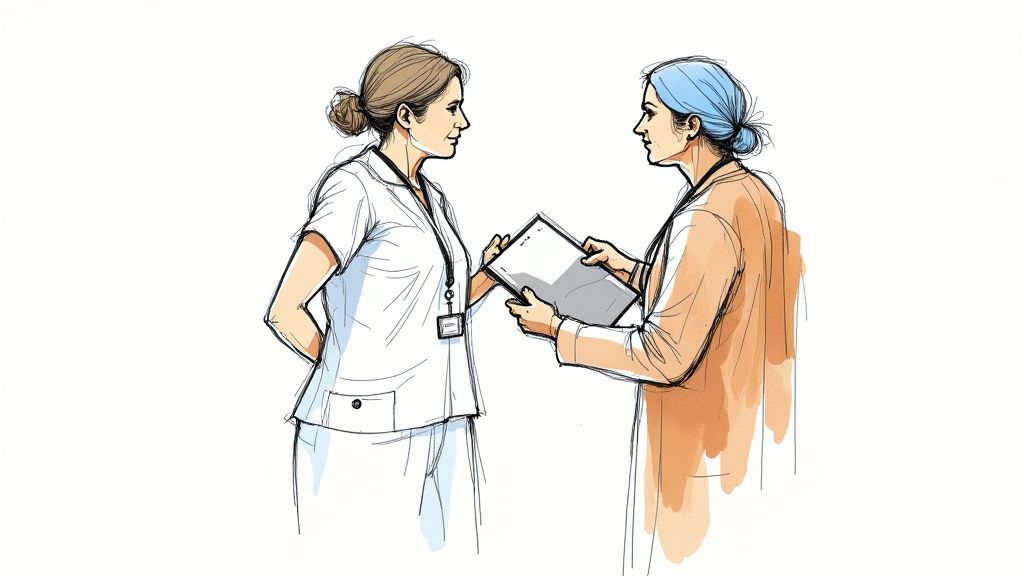
It’s tempting to focus on getting through your CNA training as quickly as possible. The sooner you graduate, the sooner you start working, right? But what if I told you the speed of your program isn’t nearly as important as what comes next?
While a solid education sets the stage, your first job is where you truly learn to be a CNA. It’s where your long-term success and job satisfaction are forged.
Think of it this way: your CNA program is like driver’s ed. It teaches you the rules of the road and the basics of operating a car. But your first job? That’s you, with a brand-new license, merging onto the highway for the first time. Having an experienced, supportive passenger in that seat makes all the difference.
That’s what good mentorship does. The guidance and support you get in your first role is a much better predictor of how long you’ll stay in the profession than how fast you finished your classes.
The Real Key to a Lasting Career
The data backs this up. Research shows that while training quality is important, a supportive mentor is what really makes new CNAs stick around. In fact, having a mentor in your first job can add about two months to how long you stay in that position. That’s a huge boost in a field that thrives on experienced caregivers. You can dig into the full study on CNA job tenure on ASPE’s website.
This really drives home a critical point: the skills you learn in a classroom are just the beginning. Your ability to apply them under pressure, navigate challenging patient interactions, and grow into a confident professional depends almost entirely on the people guiding you on the floor.
The finish line of your training program is actually the starting line of your career. A supportive work environment and good mentorship are the real keys to transforming your certificate into a sustainable and fulfilling future in healthcare.
So, as you start looking for that first job, think beyond the hourly wage. Ask tough questions during your interviews. What does their orientation look like? Do they have a mentorship or preceptor program? A facility that invests in its new hires is investing in your future, helping you build a career, not just clock in for a job.
Common Questions About CNA Training
As you get closer to choosing a CNA program, you’re bound to have some questions. It’s totally normal. Let’s walk through some of the most common things people ask so you can move forward with total confidence.
Can I Keep My Job While I’m in CNA School?
You bet. Plenty of people work full-time while they’re getting their CNA certification. The trick is finding a program that gets the reality of a working adult’s schedule.
Look for part-time programs that offer evening or weekend classes. They’re specifically designed for this. It might stretch out the timeline a bit compared to a full-time, Monday-to-Friday course, but it means you can start your new career path without having to give up your current paycheck.
What’s the Real Difference Between Online and In-Person CNA Programs?
This is a big one, and there’s a lot of confusion out there. When you see an “online” CNA program, what it really means is that it’s a hybrid program. You’ll do the book-learning part—all the theory about anatomy, patient rights, and safety procedures—through online classes you can often do at your own pace.
But here’s the critical part: no real CNA program is 100% online. It’s just not possible. Federal and state regulations are very clear that every single student must complete a certain number of hands-on clinical hours in an actual healthcare setting, working with real patients. This isn’t optional; it’s the core of your training.
The most important thing to remember is that all CNA certifications require in-person, hands-on clinical practice. The online part just replaces the traditional classroom.
If I Take a Longer Program, Will I Earn a Higher Salary?
Nope. There’s no connection between the length of your training program and your starting salary. What potential employers care about is whether you’ve passed your state’s certification exam and have that official CNA license in hand.
What actually influences your pay are things like:
- Your Location: CNA salaries can vary a lot from state to state, or even between a big city and a rural town.
- The Type of Workplace: Hospitals generally have higher pay scales than nursing homes or assisted living facilities.
- Your Experience: Once you’re on the job, your pay will grow as you build your skills and experience.
How Soon After I Finish My Classes Can I Take the Exam?
Right away! As soon as you’ve officially graduated from your program, you are eligible to sign up for your state’s CNA certification exam.
How long you’ll have to wait really just depends on the testing centers in your area. Sometimes you can get a spot in a few weeks, but in busier areas, it might be a month or more. My advice? Schedule your exam as soon as you feel ready. The sooner you pass, the sooner you can start working.
At The CNA Guide, we provide clear, state-by-state information to help you navigate every step of your journey. Explore our free resources today at https://thecnaguide.com.