So, you've earned your CNA certification. Congratulations! Now comes the exciting part: deciding where you want to work. This isn't just about finding a job; it's about finding the right job for you, one that fits your personality, skills, and long-term ambitions.
Choosing where to start can feel overwhelming. Should you dive into the high-energy world of a hospital, build meaningful relationships in a nursing home, or enjoy the autonomy of home health? There’s no single "best" answer—only what's best for you.
Finding Your Place in the CNA World
Your first CNA job can set the tone for your entire healthcare journey. Think of it less as a final destination and more as a foundational step. The key is to match the work environment with what makes you tick.
Are you someone who thrives on adrenaline and loves being part of a large, fast-moving team? Or do you find more fulfillment in a quieter setting, where you can really get to know the people you're caring for on a personal level?
What Are You Looking For in a Job?
Let's get practical. A CNA hoping to become an RN down the road would benefit immensely from the clinical exposure and networking opportunities in a hospital. On the other hand, if you're a parent who needs a flexible schedule that works around your family, home health care might be a perfect fit.
It all boils down to your personal priorities. Taking a moment to think about what you really want from your work will make the decision-making process so much easier.
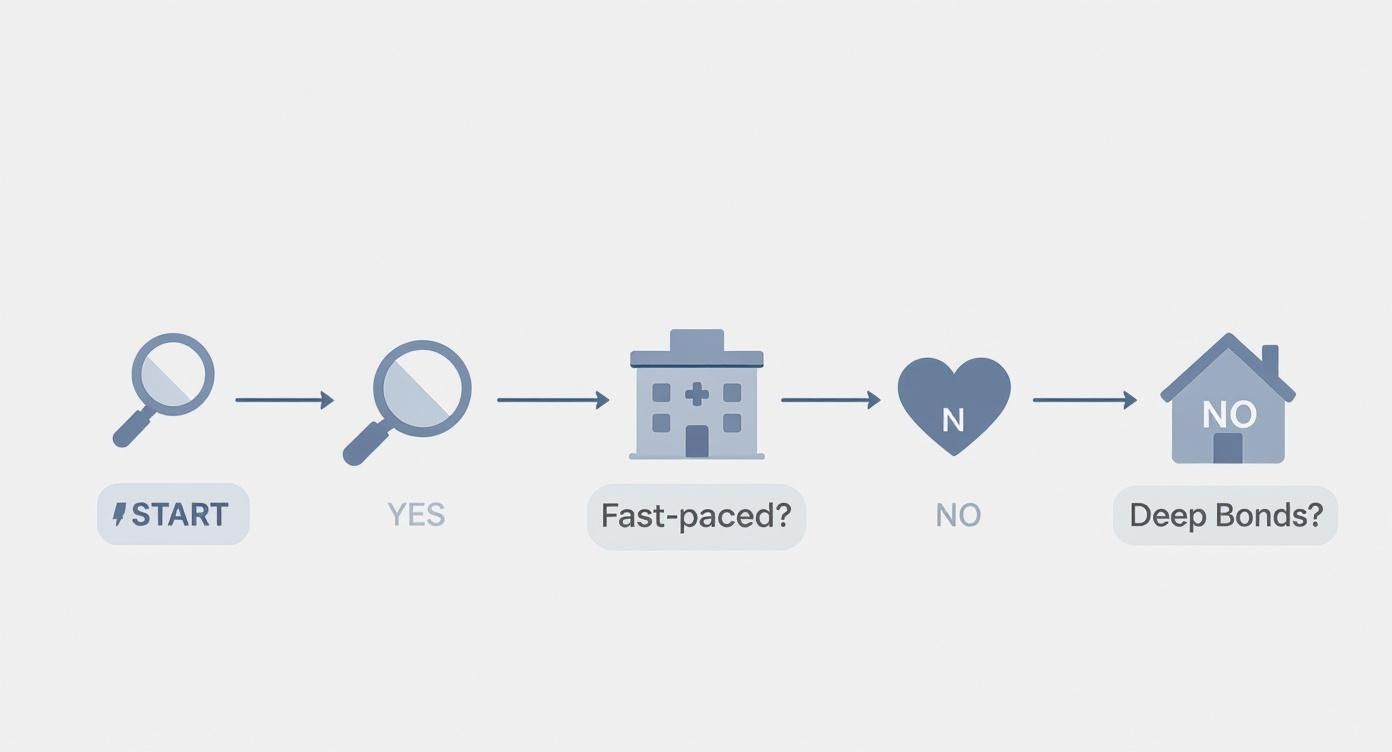
The infographic above is a great starting point. It helps you visualize how your core preferences—whether it's a desire for a dynamic environment or a need for deep patient connection—can lead you to the right type of facility. Getting clear on what matters most to you is the first real step in building a CNA career you love.
A Look Inside Different CNA Work Environments
Once you have a handle on what you're looking for, it's time to peek inside the different places you could actually work. Figuring out the day-to-day reality of each setting is the key to finding where you'll feel most at home. A CNA job isn't just a CNA job—the environment completely changes the game.
Let's break down the three most common settings: nursing homes, hospitals, and home health care. You'll quickly see how different they are and where you might truly thrive.
Nursing Homes: The Heart of Long-Term Care
If you're looking for job openings, nursing homes (often called skilled nursing facilities, or SNFs) are where you'll find the most opportunities. This is the world of long-term care. You'll be working with the same residents for months, sometimes even years.
This consistency is what many CNAs love most. You build real, meaningful relationships and become a familiar, trusted face in their daily lives. The pace can feel less chaotic than a hospital, but it's demanding in its own right. You're the go-to for helping with daily activities, keeping an eye on their health, and offering crucial emotional support. Just be aware that high patient-to-staff ratios are common, so you'll need to be a master of time management and stay resilient.
Choosing the right facility type as a Certified Nursing Assistant (CNA) is crucial for career satisfaction. According to the Bureau of Labor Statistics, CNAs make up about 33% of the nursing home workforce and provide up to 90% of direct resident care, making these facilities the largest employer of CNAs in the United States. To dive deeper into these healthcare statistics, you can learn more about the CNA workforce data on NU.edu.
Hospitals: A Fast-Paced Clinical Setting
Do you thrive on high energy and constant variety? A hospital might be your perfect match. The work here is all about acute care—helping patients with immediate, often serious medical problems. Patient turnover is fast, which means you’ll see new faces and new medical challenges all the time.
A hospital job is an incredible learning experience. One day you could be in the ER, the next on a surgical floor or even in the ICU. You're constantly exposed to specialized skills and get to learn from nurses and doctors at the top of their game. It's an ideal environment if you're thinking about continuing your education and becoming a nurse someday. The clinical experience you'll get is second to none. Before you decide, it’s worth understanding the nursing assistant role in this kind of setting.
Home Health Care: Independence and One-on-One Focus
For a totally different vibe, there's home health care. Here, you travel to clients' homes to provide support, giving them the ability to stay independent and giving you a ton of autonomy. The job is built around one-on-one care, so you can give your full attention to one person at a time.
This path isn't for everyone. It requires a lot of self-discipline, independence, and quick thinking, since you won't have a charge nurse just down the hall to ask for help. But if you love the idea of a flexible schedule and can't stand the institutional feel of a big facility, home health could be a fantastic fit. For a closer look, check out our guide on working in home health care as a CNA.
Aligning Your Workplace with Your Career Goals
Picking your first CNA job is a big deal. It’s not just about landing a paycheck; it's the first real step in your healthcare career. Think of it this way: where you start can open—or close—doors down the road. It’s smart to be strategic from day one.
So, what’s your long-term plan? If your ultimate goal is to become a Registered Nurse (RN), starting in a hospital is a no-brainer. You'll get incredible hands-on clinical experience, see a wide range of complex medical situations, and start building a network of nurses and doctors who could one day be your mentors or colleagues.
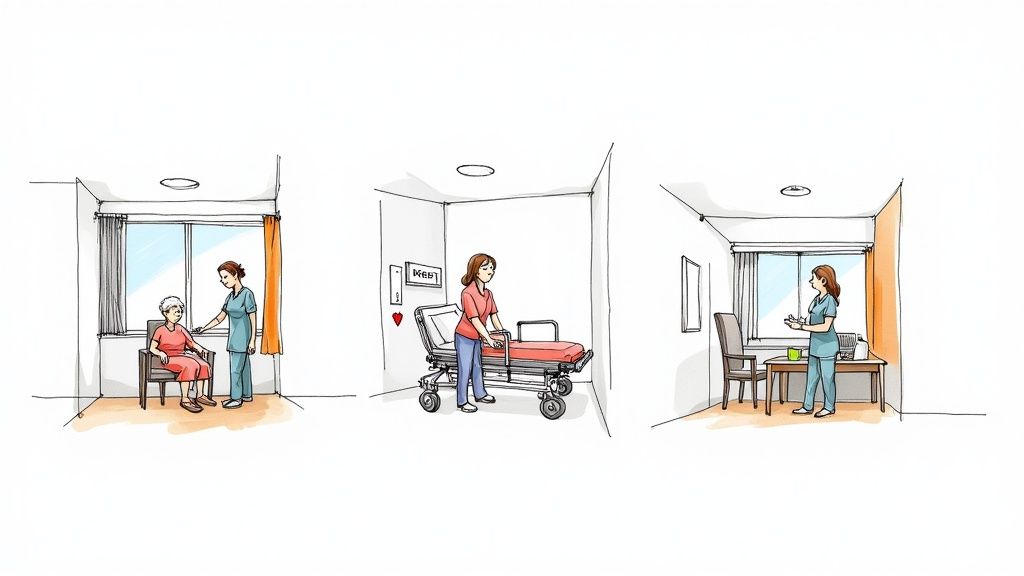
But maybe management is more your style. If you have a passion for leadership, a skilled nursing facility could be the perfect training ground. In that environment, you can often find a clear path to move up into roles like Lead CNA, Restorative Aide, or even a scheduling coordinator. You'll be honing valuable management skills while still providing direct patient care.
Match Your Passion to the Place
Don't just jump at the first job offer you get. Think about what truly interests you. Your work will be so much more rewarding if you’re in an environment that clicks with your personality and passions.
- Love the idea of working with the elderly? A long-term care or memory care facility lets you build real, lasting relationships with residents. You become an expert in geriatric care and a familiar face they depend on.
- Feel called to help people through their final chapter? A hospice facility or a home health agency specializing in palliative care can be an incredibly meaningful path.
- Want to work with kids? Look for openings in pediatric hospitals or clinics. These jobs can be competitive, but the experience is uniquely fulfilling.
Your first CNA job isn't just a paycheck; it's an investment in your future self. Choose an environment that not only pays the bills but also pays dividends toward your career goals through experience, training, and networking.
Evaluating Growth Opportunities
When you're looking at potential employers, dig deeper than the daily job description. A workplace that truly values you will invest in your growth.
Hospitals are a great example. They are a major employer for CNAs and usually offer great pathways for advancement. But they also struggle with high staff turnover. We hear a lot about RN turnover, but the rates for CNAs and PCTs are often even higher, with many leaving within just three years. To keep good people, hospitals often sweeten the deal with higher pay, better benefits, and clear promotion opportunities. You can discover more insights about healthcare retention on NSI Nursing Solutions to see the full picture.
During your interviews, be sure to ask specific questions about your future:
- Tuition Assistance: Do they have a program to help you pay for nursing school or other advanced certifications?
- In-House Training: Can you get certified in specialized skills like phlebotomy, EKG, or restorative care on the job?
- Mentorship Programs: Is there a formal program that pairs new CNAs with seasoned staff for support and guidance?
Of course, pay is a huge part of the equation. To get a handle on what you should be earning in different facilities, check out our guide on how much do CNAs make.
Ultimately, choosing a workplace that actively supports your professional development is one of the smartest career moves you can make.
What to Look For Before Accepting a CNA Job
https://www.youtube.com/embed/O3m14PVOq_g
Getting that job offer feels amazing—it’s a huge win. But before you jump to accept, remember that the hourly rate is just the tip of the iceberg. What’s hiding in the fine print can be the difference between a job you genuinely enjoy and one that has you counting the minutes until you can leave.
You have to look at the whole package, not just the paycheck.
Digging Into Total Compensation
That high hourly wage can be tempting, but it won’t feel so great if your benefits drain your bank account. Always ask for a detailed summary of the benefits package. This is what’s known as your total compensation.
Here’s what to look for:
- Health Insurance: What will you actually pay each month (premiums)? What's the deductible before coverage kicks in? Does the plan cover your family, too? These costs add up fast.
- Paid Time Off (PTO): How many vacation, sick, and personal days do you get per year? Crucially, when can you start using them? Some places have a long waiting period.
- Retirement Plans: Does the employer offer a 401(k) or 403(b)? Will they match your contributions? An employer match is literally free money for your retirement—don't leave it on the table.
The Reality of Your Schedule and Staffing
Your work schedule pretty much controls your personal life, so don't just gloss over it. Find out if you'll have a set, predictable schedule or if you’ll be on a rotating shift that changes constantly. An unpredictable schedule makes it almost impossible to plan for school, family events, or even just a dentist appointment.
You also need to ask the tough questions about overtime. Is it optional, or is it mandatory? A little extra cash is great, but being forced into double shifts all the time is a one-way ticket to burnout.
A workplace that cares about its staff invests in them. The clearest sign of this is the patient-to-CNA ratio. Low ratios mean you can give quality, safe care without running yourself ragged. High ratios are a massive red flag for a chaotic and stressful environment where turnover is probably high.
Why a Supportive Culture Matters Most
Let's be real—no job is perfect. But having supportive managers and coworkers can make even the most challenging days feel manageable. When you're interviewing, try to get a sense of the leadership's style. Do they seem like they actually listen to their team? A good manager advocates for you and helps you grow.
Think about the environment, too. The home health care field, for instance, is booming. It offers CNAs a lot more independence and one-on-one time with patients. The Bureau of Labor Statistics projects a 4–5% growth for nursing assistants in the next decade, with a huge chunk of that in home health. To attract and keep good CNAs, many agencies are offering better pay and even sign-on bonuses. Discover more insights about the CNA job outlook from Vitali Partners. This setting provides a different kind of support through autonomy and flexibility.
At the end of the day, choosing the right facility isn't just a career move—it's a life decision. By carefully weighing the compensation, schedule, staffing ratios, and workplace culture, you’re setting yourself up for a role that supports you both professionally and personally.
Asking the Right Questions in Your Interview
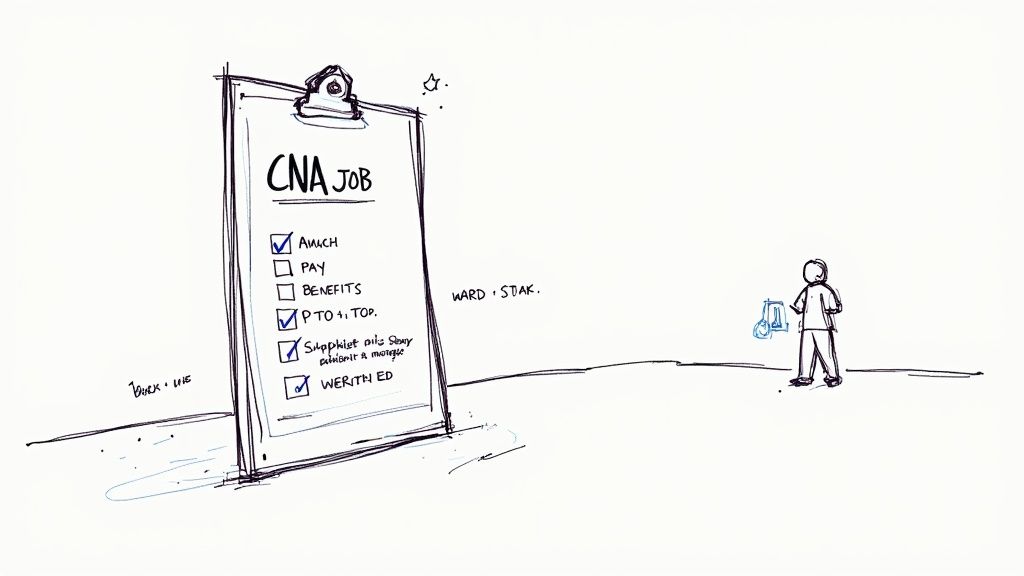
Remember, an interview isn’t just about the employer deciding if you’re a good fit. It's your best chance to pull back the curtain and see what a facility is really like to work for. The answers you get can reveal more about the daily grind and company culture than any polished job description ever will.
Your mission here is to get past the generic talk about pay and benefits. You need to understand the day-to-day reality for the CNAs who are already on the floor. This is how you find a job you’ll love, not just tolerate.
Questions About Staffing and Teamwork
Staffing is everything. It directly affects your stress levels and your ability to give the quality care your patients deserve. If you get vague, evasive answers about staffing, consider it a major red flag. Don't be shy about asking for the details.
- "What are the typical CNA-to-patient ratios for the day, evening, and night shifts?"
- "How do you handle call-outs or unexpected staff shortages on a shift?"
- "Can you tell me how the CNAs and nurses work together as a team here?"
A facility that's open about its staffing numbers and has a solid plan for when things get tough is usually a much healthier place to work. How they handle chaos tells you a lot about what they value.
Uncovering the Real Workplace Culture
Every facility has a mission statement hanging on the wall, but you want to know what the culture is like in the trenches. The right questions can help you get a feel for the management style and how they truly treat their staff.
Try asking something like, "How does management get feedback from the CNA team, and what do they do with it?" This tells you if your voice will actually be heard. You should also ask them to walk you through their orientation process to see how much they invest in setting new hires up for success.
A great orientation is so much more than a quick building tour. It should involve shadowing an experienced CNA for several shifts, hands-on training for facility-specific equipment and procedures, and regular check-ins to make sure you feel supported. A flimsy onboarding process can leave you feeling lost and overwhelmed from day one.
Inquiring About Professional Growth
A job should be more than just a paycheck—it should be a stepping stone in your career. Asking about opportunities for growth shows you're ambitious and helps you find an employer who wants to invest in your future.
Here are a couple of good ones to ask:
- "Are there opportunities for CNAs to get certified in specialized areas, like restorative care or phlebotomy?"
- "Does this facility offer any tuition reimbursement or schedule flexibility for employees who are going back to school?"
Knowing what to ask can completely change the game. For more ideas, check out this great list of questions to ask at the end of an interview. Walking in prepared is crucial, and we cover everything you need to know in our guide on how to prepare for a CNA interview.
Got Questions? We've Got Answers
Stepping into the world of a CNA or even just switching jobs brings up a ton of questions. It's completely normal to feel a little unsure about the path ahead. Let's tackle some of the most common questions I hear from CNAs, both new and experienced, to give you some clarity.

Think of this as your final checklist to make sure you're moving forward with total confidence.
Which Facility Type Pays CNAs the Most?
If you're looking purely at the hourly rate, hospitals often come out on top. They typically pair that higher wage with more comprehensive benefits packages—think better health insurance and solid retirement matching programs.
But money is rarely that straightforward. Your pay can swing pretty wildly depending on your state, city, and how many years you've been in the field. Don't forget that some specialized skilled nursing facilities or private home health agencies that handle high-acuity patients might offer very competitive pay to get the best people. The key is to look at the total compensation, not just the number on your paycheck.
What's the Best Workplace for a Brand-New CNA?
From what I've seen, many new CNAs get their start and build a really solid foundation in a skilled nursing facility or a long-term care home. These settings are fantastic for learning the ropes.
Why? It’s all about the structure. They usually have well-defined orientation and mentorship programs, giving you a predictable environment to master your core skills. Once you've got that hands-on experience under your belt, you’ll be much more prepared to jump into a faster-paced hospital setting if that's your goal.
It’s not about finding the single "best" place forever, but the best place to start. A supportive first job where you can nail the fundamentals without getting overwhelmed is worth its weight in gold for your long-term career.
Can I Switch Between Facility Types in My Career?
Absolutely. In fact, this is one of the biggest perks of being a CNA. Your skills are incredibly transferable, and it's super common for CNAs to move between different work environments as their lives and goals change.
You could start in a nursing home to build your confidence, then move to a hospital to get that valuable acute care experience. A few years later, you might decide the flexibility of home health is a better fit. Every move adds a new tool to your professional toolkit, making you a more versatile and in-demand candidate.
How Important Is the Patient-to-CNA Ratio?
Honestly, this is one of the most critical factors you should consider. The patient-to-CNA ratio directly impacts your daily stress levels, job satisfaction, and—most importantly—patient safety. It's a huge deal.
A lower ratio means you actually have the time to provide the kind of attentive, high-quality care everyone deserves. It keeps you from feeling constantly rushed and helps prevent burnout. When you're interviewing, always ask about the typical patient ratios on all shifts. A facility that's open and proud of its staffing levels is usually a good sign they value both their staff and their patients.
Ready to take the next step in your career with confidence? At The CNA Guide, we provide free, up-to-date resources on state-approved training programs, licensing, and finding the perfect job for you. Explore your options and build the career you deserve at https://thecnaguide.com.