Working as a Certified Nursing Assistant is a job of real highs and lows. You get the incredible feeling of helping people every single day, but it also comes with its share of tough physical and emotional demands.
For many CNAs, it's a constant balancing act. You're making a genuine difference in patients' lives, yet you're also dealing with some pretty demanding work conditions. While the job security is strong, you absolutely need resilience to handle the day-to-day pressures.
Is A CNA Career The Right Path For You?
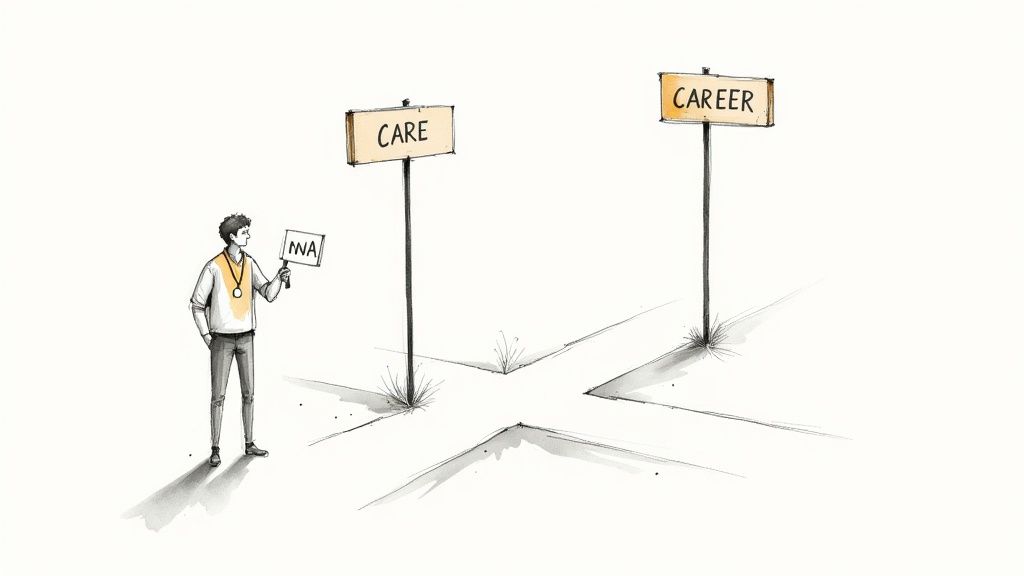
Choosing to become a CNA isn't just a career move; it's a life decision. This role puts you right at the heart of patient care, offering a helping hand to people when they are at their most vulnerable.
This guide is here to give you an honest, eyes-wide-open look at what the job is really like. We’ll cover the deep satisfaction you can get from this work, but we'll also tackle the tough stuff like workplace stress and the realities of pay.
To get a feel for the daily routine, take a look at a typical CNA job description. And if you're still on the fence, it can help to see what similar roles entail; check out this piece on what it's really like to be a healthcare assistant for another perspective.
You're Not Just a Caregiver—You're a Lifeline
Let's talk about what really keeps CNAs going, beyond the paycheck and the practical skills. It's that feeling you get at the end of a long shift—the deep-down knowledge that you truly made a difference for someone.
You're there when people are at their most vulnerable. You’re providing more than just physical care; you’re offering comfort, preserving their dignity, and being a steady presence when they need it most.
This job is full of small, incredible victories that most people never see. It’s helping a resident finally eat a full meal after days of struggling. It’s sharing a joke that cuts through the tension and brightens a difficult afternoon. Moments like these give your work a powerful sense of purpose that’s hard to find anywhere else.
Building Connections That Truly Matter
As a CNA, you're often the most consistent person in a patient's daily life. You're the one they see every morning, the one they count on for help. This unique role allows you to build incredibly strong, trusting bonds.
For so many of us in this field, the real reward is knowing you’ve had a genuine, positive impact. You stop being just an employee and become a confidant, an advocate, and a rock for patients and their families. That’s what makes the hard days worth it—it’s the very heart of this work.
Building a Stable and Growing Healthcare Career
While the emotional rewards are a huge part of the job, a CNA career is also a smart, practical choice. The need for skilled caregivers is growing every day, especially with our aging population. This creates a level of job security that's hard to find in other fields.
Plus, this is a role that can't be outsourced to a robot. The very heart of being a CNA—providing compassionate, hands-on care—is something technology just can't replicate. In fact, studies show that 85-90% of CNA tasks are resistant to automation, which is way higher than many other healthcare jobs. You can read the full research about AI-proof careers for a deeper dive.
The infographic below really breaks down what makes a CNA career so fulfilling.
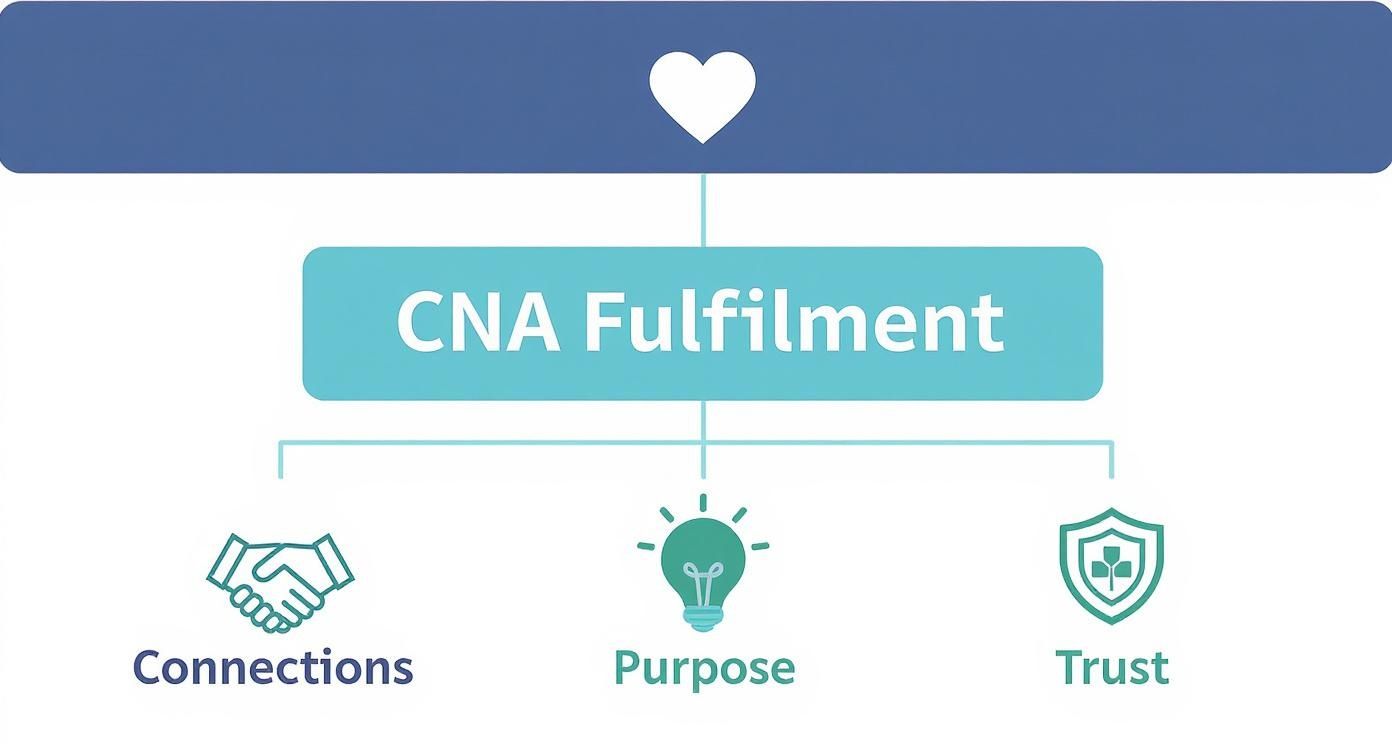
As you can see, the core of the work revolves around building genuine connections with patients, finding a deep sense of purpose, and earning their trust.
A Launchpad for Advancement
Think of your CNA certification not as the finish line, but as the starting block for a much bigger career. It's the perfect entry point into the healthcare world, giving you hands-on experience that opens up a ton of doors down the road.
Many people start as a CNA and then use that foundation to continue their education. Common next steps include becoming a:
- Licensed Practical Nurse (LPN)
- Registered Nurse (RN)
- Specialized technician in areas like phlebotomy or EKG monitoring
Understanding the Physical and Emotional Toll
While being a CNA is incredibly fulfilling, it's also important to be honest about the challenges. The role is tough on your body. You're on your feet for long shifts, and the constant lifting, transferring, and repositioning of patients can take a real physical toll over time.
But often, it's the emotional side of the job that's even harder. Day in and day out, you're on the front lines, caring for people who are in pain, scared, or nearing the end of their lives. This constant exposure to human suffering can lead straight to compassion fatigue and burnout.
Facing Compassion Fatigue and Burnout
Compassion fatigue isn't just feeling tired; it’s a deep emotional and physical exhaustion that hits caregivers hard. It's what happens when you absorb so much of your patients' trauma and stress that you start to feel completely drained and even disconnected from the work you once loved.
Imagine helping a resident you’ve grown close to through their final days. You provide comfort and dignity, but the emotional weight of that experience stays with you long after your shift ends. Managing this toll is a critical skill for a sustainable career.
Learning about the psychological impact of burnout and chronic stress on emotional well-being is a great first step. For more targeted tips on how to cope, our guide on overcoming CNA burnout has practical advice you can use right away.
The Reality of Low Pay and High Pressure
Let's be honest: two of the biggest hurdles you'll face as a CNA are the pay and the pressure that comes with the job. It's a tough reality that many CNAs feel their paycheck doesn't quite match the incredibly important, hands-on work they do every single day. That can create real financial stress.
This pay issue is a major reason why turnover can be high. There are over 1.47 million CNA jobs in the U.S., but facilities often have a hard time keeping them filled. When wages don't keep up with the cost of living, it's a constant struggle. To get a better picture of the numbers, it’s worth exploring how much CNAs make across different states and workplaces.
When Staffing is Short
Low pay often leads directly to another huge problem: understaffing. When a facility can't hire enough people, the workload for each CNA skyrockets. This can mean rushing from one resident to the next, feeling like you can't give the quality time each person deserves, and a much higher risk of burning out.
Staffing shortages create a difficult cycle. CNAs are overworked due to low staffing, which leads to burnout and more people leaving the profession, further worsening the shortage. It puts immense pressure on those who remain dedicated to patient care.
Understanding these on-the-ground challenges is essential. It gives you a complete view of what it really means to be a CNA. You can learn more about the nursing shortage findings to see just how widespread this issue is.
Strategies for a Thriving and Sustainable CNA Career
Let's be real: thriving as a CNA isn't just about surviving the tough shifts. It's about being smart and proactive so you can build a career that lasts and keeps you fulfilled. You have to actively protect your own well-being.
First up, your physical health is everything. This job is demanding, so mastering proper body mechanics for lifting and moving patients isn't just a "nice-to-have"—it's a must to avoid injury. Just as important is getting real rest between shifts to let your body actually recover.
On the flip side, you have to guard against emotional burnout. That means setting firm boundaries between your work life and home life. Finding a solid support system of other CNAs who just get it can also make all the difference.
A sustainable CNA career is built on a foundation of self-care and smart career management. By actively protecting your physical and mental health while seeking growth, you transform a demanding job into a rewarding, long-term profession.
Taking charge of your career path is just as critical. Always keep an eye out for employers who genuinely create a positive work environment and are willing to invest in you. Never be afraid to use your skills and experience to negotiate for better pay or seek out chances for continuing education. Building on your skills doesn't just open up new doors; it proves your value in the healthcare field.
Your CNA Career Questions, Answered
Thinking about a career as a CNA? It's a big decision, and you've probably got a lot of questions. Whether you're just starting to explore this path or you're already a CNA looking ahead, getting straight answers is key.
Let's dive into some of the most common questions we hear.
How Long Does It Take to Become a CNA?
One of the best things about becoming a CNA is how quickly you can get started. Most state-approved training programs take just four to twelve weeks to complete.
This means you can get into the healthcare field, start making a difference, and earn a paycheck much faster than with many other medical jobs.
What is the Job Outlook for CNAs?
The job outlook is solid. The U.S. Bureau of Labor Statistics projects that CNA jobs will grow by 4-5% through 2032.
What does that mean for you? It translates to over 220,000 job openings popping up each year. As our population gets older, the need for skilled, compassionate CNAs is only going to increase. You can get more details on the future of CNA jobs to see the full picture.
Can I Advance My Career from a CNA Position?
Absolutely. Think of your CNA certification as a launchpad, not a final destination. The hands-on experience you gain is an incredible foundation for a lifelong healthcare career. Many CNAs go on to become a:
- Licensed Practical Nurse (LPN)
- Registered Nurse (RN)
- Medical Assistant (MA)
- Specialized Technician (like in Phlebotomy or EKG)
The skills you master as a CNA—everything from talking with patients to understanding clinical basics—are exactly what you need to succeed in more advanced nursing roles. It’s more than a job; it's a smart first step.
Here at The CNA Guide, we're all about helping you move forward with confidence. Whether you need help finding a training program or want to explore your options, our free resources are here for you. Find your path at https://thecnaguide.com.